Madras Day: The City That Keeps Rediscovering Itself
What makes Madras Day interesting is that it’s not simply a celebration of a date. It is an opportunity to continue discovering the many histories within Chennai, writes Janani Sampath.
Every August, Chennai turns its gaze towards its own past. August 22, 1639, is generally regarded as the date that marks the beginning of the modern city, when the East India Company acquired the piece of land on which Fort St George would eventually come up. But there was already a landscape of villages, temples, communities and trading centres long before that date as Madrasapatinam.
The celebration of Madras Day is far more recent – it began in 2004 as a relatively modest celebration and has grown into a month-long affair, with talks, walks, exhibitions, quizzes, food trails, photography projects and a host of other events. The celebration is not a centralised celebration, and individuals, institutions, schools, cultural groups and, increasingly, younger people organise their own versions of Madras Day.
Sashi Nair, writer-editor, was one of the early catalysts of Madras Day along with historian S Muthiah, and Vincent D’Souza. “We started in a small way asking schools to participate,” he recalls. About a dozen schools eventually came on board, getting children to create drawings, paintings and models of heritage places in the city. The first celebration was an exhibition at Rajaji Hall, with talks and other events at a few venues around the city. “It was all very skeletal,” Nair says. It took several years for the celebration to build momentum. In those early years, the organisers relied on press meets, newspaper listings, radio and word of mouth to tell people what was happening.
The transformation since then has been remarkable and includes a much larger ecosystem. “Social media has fundamentally altered the nature of the celebration, bringing a younger generation into the conversation about heritage and the city”, Nair says. The important thing, he adds, is that many of them are not merely organising an event during Madras Week and then moving on. They are researching and exploring the city throughout the year.
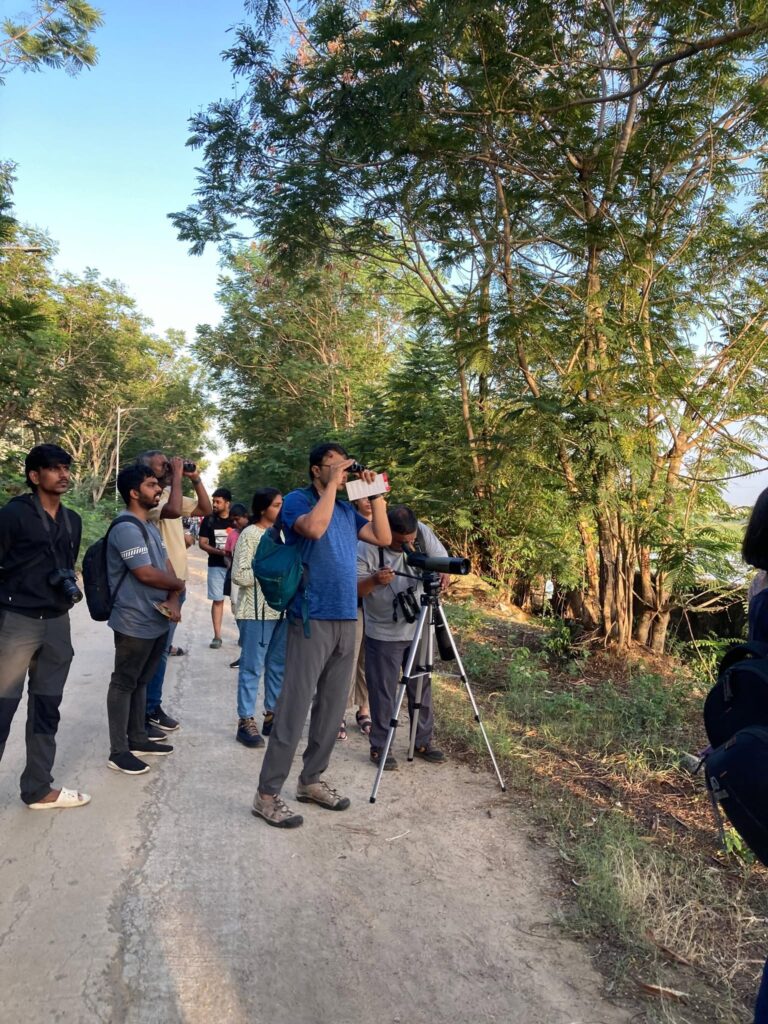
“People feel ownership, and there is a sense of belonging that people feel to a city which they feel is their home,” Nair says.
Madras before Madras
The widening of the celebration has also changed the story being told. In its early years, the British component of Madras was the area of focus. But as the celebrations have expanded, the city’s pre-British history has begun to receive equal attention.
Heritage enthusiast and researcher Padmapriya Baskaran believes this is one of the most positive developments in the evolution of Madras Day.
“The positive thing that has happened is they are no longer just looking at the British history of Madras,” she says. “There are food walks, old house walks, temple walks, all kinds of things that are happening. There is photography, there are reels about Madras.”
The result, she says, is that the city’s dual identity is being acknowledged. “It is not just British Madras, but it is also Chennai. It is all the old villages that existed even before the British came here.”
The distinction matters because the city did not emerge out of an empty landscape. Mylapore, Triplicane, Mambalam, Purasawalkam, Thiruvottiyur, and several other settlements had their own histories and cultural identities.
Baskaran describes the British process of assembling the city as being almost like putting together Lego pieces. “They have brought different villages whose revenue rights they acquired over time into one city.”
Historian Chithra Madhavan sees this older temple history as an especially rich area for exploration. During Madras Day, she deliberately reserves some of her programmes for Chennai-specific subjects that she would not necessarily choose at other times of the year.
“I give talks throughout the year on history, temple architecture, art, inscriptions etc., but when it comes to Madras Day talks, it’s focused solely on Madras,” she says.
This year, for instance, she has been speaking about the Navagraha Kshetras around Chennai and the sculptures and inscriptions in the Madras Museum. She also conducts Chennai-focused walks around the museum’s bronze and stone sculpture galleries.
For Madhavan, Madras Day provides a useful reason to bring these subjects together under the city’s larger historical umbrella. She has also noticed a younger audience increasingly attending her programmes, particularly when colleges invite her during Madras Week.
“Which is nice because it’s also taking it to a younger group and who grow with that awareness,” she says.
Madhavan points out that Chennai is, in many ways, a city of temples. Ancient temples, inscriptions, sculpture and religious traditions survive within what is now an intensely urban landscape. She says, “This city is simply full of history. And there is so much to be explored also.”
From one Madras to Many
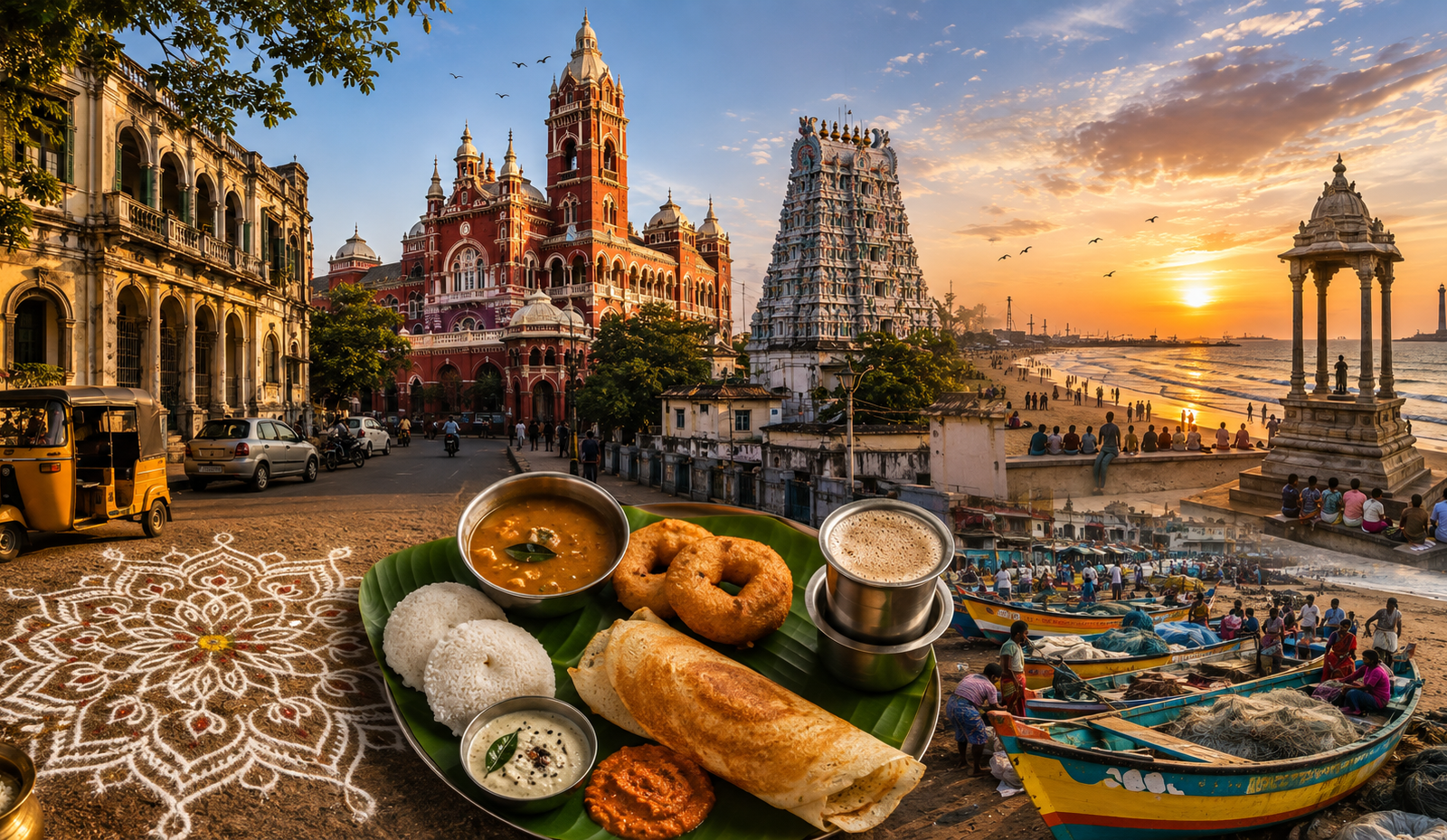
The celebration has also become more comfortable with the fact that there is no single version of Madras. The old stereotypes of Madras Bashai, filter coffee, the Marina, Carnatic music and colonial buildings have been joined by neighbourhood histories, migrant communities, food, art, photography and personal memories.
Historian Venkatesh Ramakrishnan believes this shift towards smaller, more intimate histories is significant. People are increasingly interested in the history of their own neighbourhoods rather than in a broad, generic history of Madras.
“If they are living in Mylapore, they want to know what Mylapore is,” he says. He has noticed that people inviting him to speak during Madras Day are increasingly asking him to talk about their particular areas rather than Madras as a whole. One talk may be about Nungambakkam, another about a particular street, building or locality.
These are histories that may never have found their way into conventional accounts of the city. An old family home, a vanished tram route, a neighbourhood tradition or an obscure local personality can suddenly become part of the Madras story.
For Ramakrishnan, these personal memories are important because they make history experiential. He recalls stories told by older members of his family about the city’s trams and the peculiarities of travelling in them. Such memories are disappearing with the people who carry them.
Has Madras Day become too much of a celebration?
Ramakrishnan feels that the sheer scale of Madras Day in recent years may have diluted some of what made it meaningful.
In the early days, he says, each Madras Day seemed to add another piece of information to what was known about the city. It was like “pebble by pebble” building a mountain of information. But the overexposure of recent years, with too many events and too much publicity, may have diluted that process. “It is basically a repetition and basically a celebration sort,” he says.
Madras, he believes, still needs considerably more research. The answer is not necessarily more events, but more researchers who can uncover information and bring it together. While wider participation is one of the celebration’s greatest achievements, participation has also become performative.
“Sadly, what I’m seeing is every school, every organisation wants to do something for Madras Day only for social media pictures,” Baskaran says.
“You’re losing something or the other every day in the name of development: a hundred-year-old building, a cinema theatre, a hall, a mandapam, a loose statue. Something is disappearing every day.”
Baskaran says Madras Day should make people look at what remains around them. A school celebrating Madras could take its students outside its gates and explore the history of its own neighbourhood. A corporate could look beyond a themed event. A resident could ask what stood on the street before the apartment building came up.
“Why can’t you actually take people around the school to explore what is remaining of the original Madras around your school?” she asks.
A city that belongs to everyone
There is, however, something undeniably encouraging about the sheer spread of Madras Day. Nair sees it as evidence that the city has taken ownership of the celebration. It is no longer dependent on a small group of initiators or on a press conference to create momentum. This year, he says, programmes are turning up in places and neighbourhoods that were previously overlooked, including parts of North Chennai.
Perhaps that is also why Madras Day has endured. The city it celebrates has never been static. It has grown, absorbed, changed and reinvented itself, while carrying traces of what came before.
For chartered accountant and heritage enthusiast Karthik Bhatt, this ability to evolve while remaining connected to its past is one of Chennai’s defining characteristics. “Chennai is unique because it keeps pace with time, but at the same time it doesn’t move away from its roots,” he says.
It is this coexistence, Bhatt argues, that gives Chennai its particular character. “It is a mosaic of liveliness and conservatism, all in one frame.” The city can be traditional and contemporary, deeply rooted and constantly evolving, sometimes within the same street or even the same building.
A centuries-old temple can exist beside a modern office. A traditional neighbourhood can sit alongside a rapidly developing commercial district. Old homes, new apartments, street food, fine dining, Carnatic music, cinema, technology and contemporary art all occupy the same urban landscape. For Bhatt, this is not a contradiction that needs to be resolved. It is precisely this coexistence that makes Chennai distinctive.
But coexistence also depends on what the city chooses to protect. For Nair, the celebrations can only mean something if there are stronger mechanisms to preserve the heritage they seek to celebrate.
“The most important thing is to have a heritage commission that can oversee the preservation of heritage. Although there is a Heritage Act, nothing has really taken off. Today you can demolish a heritage building just like that. The beach house in Queen Mary’s College was flattened that way last month. So these celebrations don’t mean much unless the basics are in place.”
The challenge, then, is not to preserve the city in a particular moment in time. It is to allow it to evolve without losing the memory of what made it what it is. A city that keeps changing while holding on to its many layers of history and memory, a commemorative day like Madras Day is really a celebration of its essence as Chennai.
#Celebrating Madras#Conservation#Heritage#History#Madras Day