Where Every Doll Tells a Story and Every Generation Adds a Memory
From our great-grandmother’s tradition to the revival by the current generation, Navaratri dolls celebrate faith, mythology, Indian craftsmanship, family memories and the joy of human connection, writes Dr Akhila Nagaraj.
The tradition of arranging Navaratri, Gombe Habba in Kannada, Bommai Golu in Tamil and Bommala Koluvu in Telugu Bommai Golu, was lovingly followed by my great-grandmother and aunt. Somewhere along the generations, however, it was lost in our family. Thankfully, it was my daughter who revived it, bringing back not just a festive custom but a beautiful opportunity to reconnect with our heritage, our memories and one another.
Today, our bombe is a collection of stories — some from our great epics, others from our travels, and many associated with the people who have been part of our lives.
The Sacred Centre
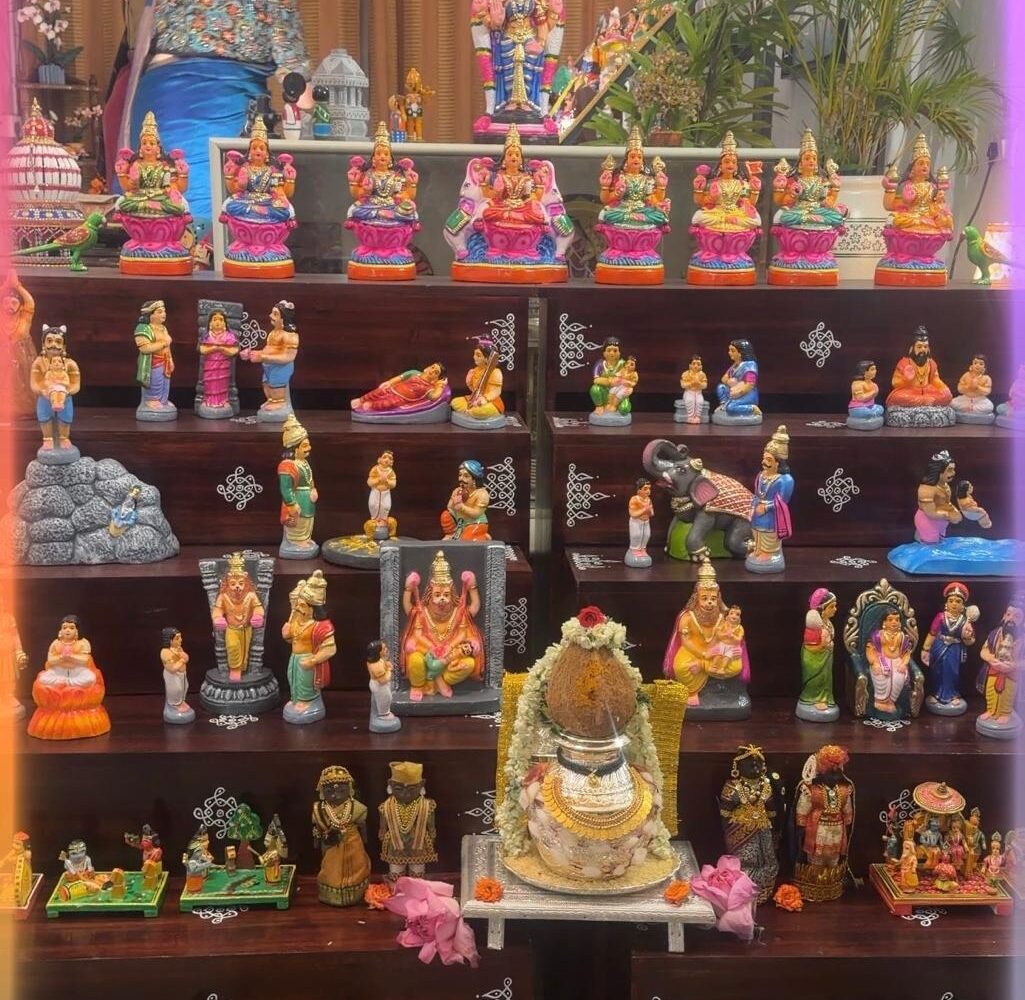
At the heart of our bombe collection is the Kalasha, ceremonially invoked by the priest as the sacred presence of Goddess Lalita Tripura Sundari. Navaratri celebrates the Divine Feminine and the triumph of good over evil, reminding us of the enduring significance of faith, courage and righteousness.
Beside the Kalasha stand the traditional Pattada Gombe, the ceremonial bride-and-groom dolls gifted to a couple at marriage. Representing Lakshmi and Narayana, they symbolise marital harmony, prosperity and the blessings of a shared life. Their place beside the Kalasha makes them especially meaningful in linking devotion with family tradition.
Around this sacred centre, the dolls unfold stories of gods and goddesses, devotion, mythology, everyday life and traditional craftsmanship.
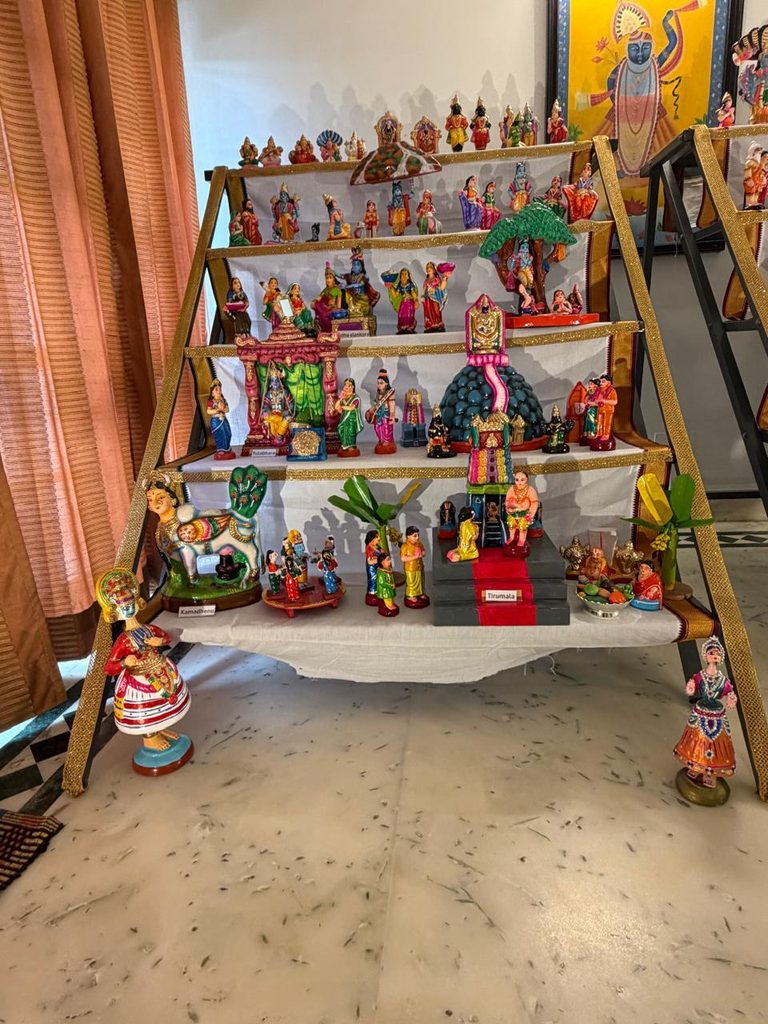
Epics Come Alive on the Steps
This year, our collection is arranged on traditional stands, including one brought from Srirangam, a temple town in Tamil Nadu.
The bottom step recreates the grandeur of the Mysuru Dasara procession, with the magnificently illuminated Mysore Palace forming its backdrop.
Above it, beautifully-crafted lacquered toys from Varanasi in Uttar Pradesh narrate the Ramayana — from Sita’s Swayamvara and Rama’s exile to Sita’s abduction, the slaying of Ravana and Rama Pattabhishekam. The story continues with Lava and Kusha and Rama’s reign in Ayodhya.
The next three steps depict the remarkable story of Prahlada and Lord Narasimha. Beginning with Hiranyakashipu’s penance and Kayadhu’s care for young Prahlada, the scenes portray the trials faced by the child devotee, the dramatic appearance of Lord Narasimha and finally Prahlada’s coronation.
The topmost shelf holds a cherished Ashtalakshmi set, a gift from my dance teacher, making it especially meaningful.
Another stand brings together Vishwaroopa, Shiva-Parvati, Rama slaying Ravana and the divine wedding of Srinivasa and Padmavati.
The Mahabharata is represented through memorable episodes of divine intervention. One depicts Durvasa Muni’s visit to the Pandavas and Krishna’s intervention through the Akshaya Patra. Another portrays Draupadi Vastraharana, where Krishna protects Draupadi’s dignity.
Also displayed are Shrinathji, brought from Nathdwara in Rajasthan, the GI-tagged Kondapalli Dashavatara toys and Sudarshana Narasimha.
Divine Couples and the Playful World of Krishna
A separate stand is dedicated to the goddesses Saraswati, Durga and Lakshmi, alongside divine couples and families — Lakshmi Narasimha, Lakshmi Hayagriva, Padmavati-Venkateshwara, Rukmini-Vitthala and the Rama family.
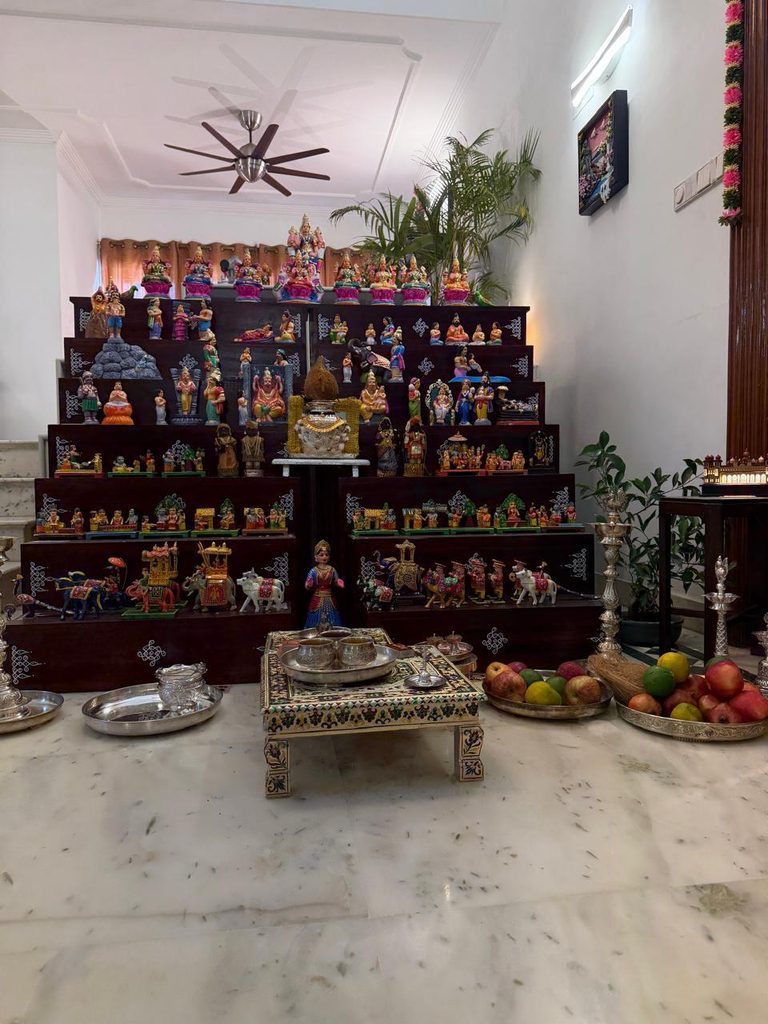
The subsequent steps celebrate Krishna Leela, beginning with Krishna’s birth to Devaki and Vasudeva, followed by Govardhana Leela, Rasa Leela, Radha Alankara and the playful episode of Cheer Ghat.
The Tulabharam scene, featuring Krishna, Rukmini, Satyabhama and Narada, beautifully illustrates the value of sincere devotion over material wealth.
A miniature Tirumala shrine, devotees visiting the temple, Kamadhenu and a small Rasa Leela complete this section.
A Miniature Village and Memories of Travel
One of the most delightful parts of our display is the tabletop village scene.
Traditional Kondapalli houses, colourful figurines and scenes of everyday village life recreate the charm of an Indian village. There is even a cotton candy seller, bringing back memories of childhood fairs and festivities.
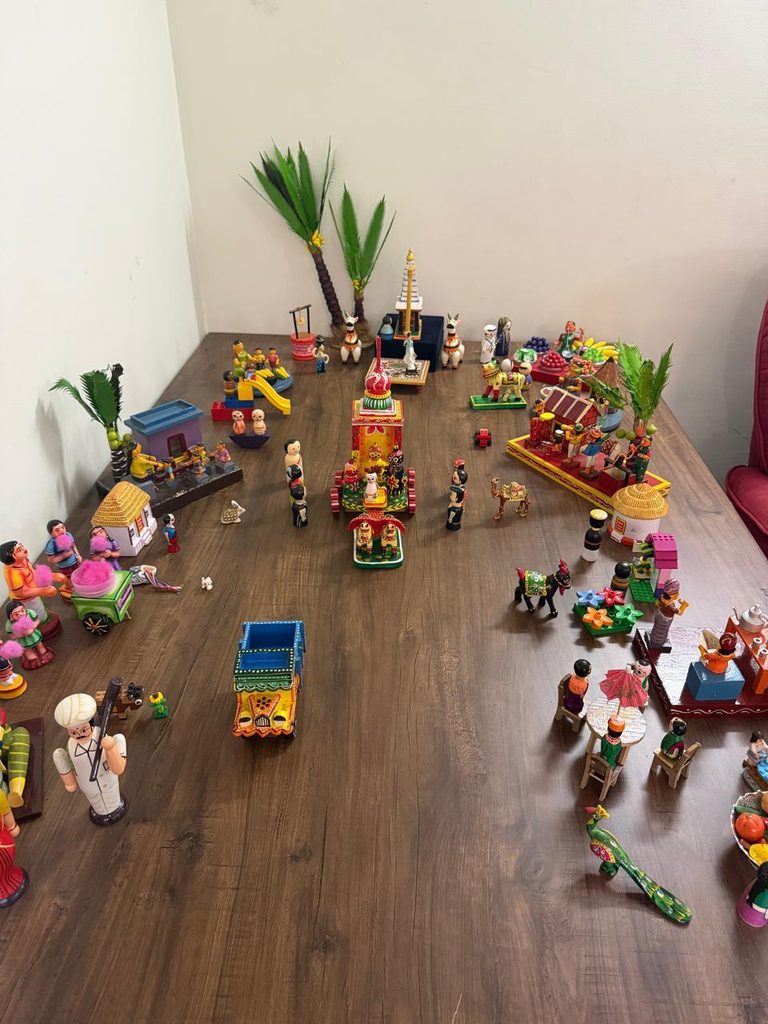
Channapatna toys, little LEGO creations and dolls collected from different countries add their own character to this miniature world.
Our collection also includes the Udupi Ratha, stone craftsmanship from Belur and Halebidu, an inlay-work elephant from Agra and a beautifully beaded elephant from South Africa.
These are not merely souvenirs. Each toy reminds us of a journey, a person, a place or an experience. Some were carefully chosen during our travels, while others were lovingly gifted.
Another stand has a contemporary addition — my daughter’s LEGO Botanical Collection. It may seem unusual alongside traditional dolls, but to me, it represents something wonderful: a younger generation finding its own place within an inherited tradition.
After all, traditions remain alive when each generation adds something of its own.
More Than a Festive Display
Preparations begin well before Navaratri. We clean the house thoroughly, declutter our spaces, bring out the carefully stored dolls and begin arranging the steps.
In the process of clearing our homes, we perhaps declutter our minds too.
There is a special pleasure in rediscovering an old toy, remembering who gifted it, recalling the place from which it came and finding the perfect spot for it.
The entire family becomes involved, and the preparation itself turns into an occasion for storytelling and togetherness.
The tradition also reminds us of India’s rich cultural heritage. The grand Dasara celebrations patronised by the Vijayanagara rulers brought together devotion, art, music, craftsmanship and community participation. Our display, in its own small way, reflects this same spirit.
When Dolls Bring People Together
For me, however, the most enjoyable part of the festival is not merely arranging the dolls. It is welcoming people into our home.
In today’s world, where screens increasingly occupy our attention, the festival gives us a wonderful reason to meet family, friends, neighbours and relatives.
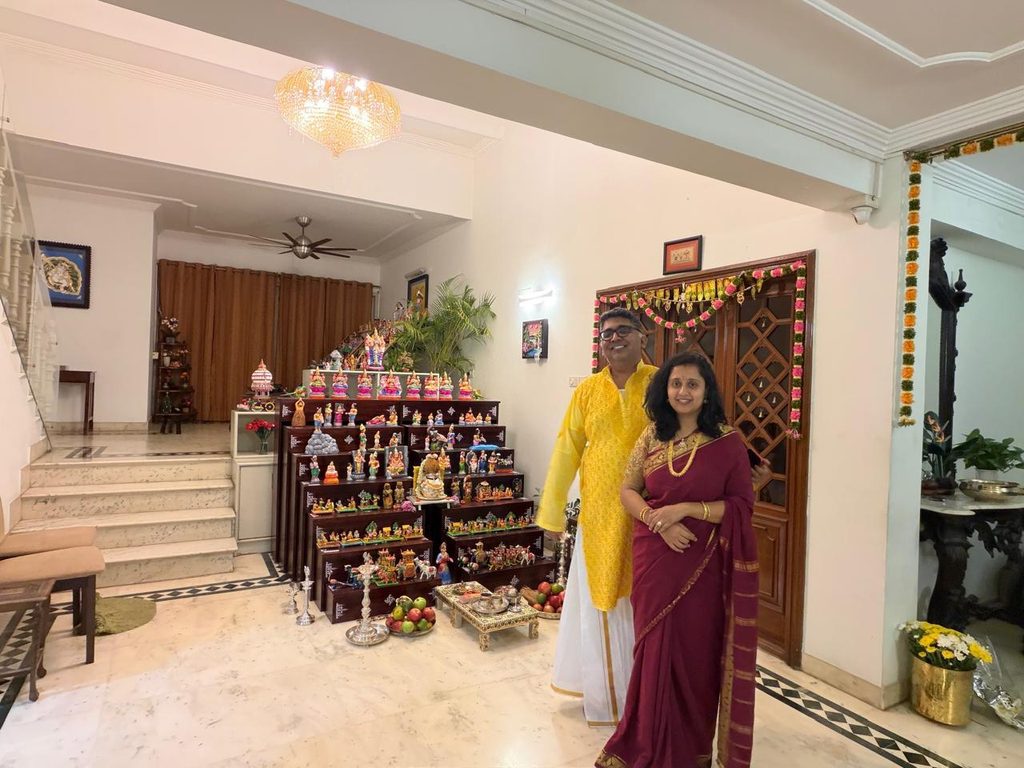
Visitors admire the displays, ask questions, recognise familiar stories and share memories of their own childhood celebrations. Children listen with curiosity, while older generations rediscover stories they grew up hearing.
As a developmental paediatrician, I find this particularly meaningful. Children learn through play, observation, storytelling and interaction with people of different generations. Traditions like Navaratri offer opportunities for all these experiences in a natural, enjoyable setting.
It reminds me of Toy Story, where toys magically come alive.
Our dolls come alive in a different way — through the stories they make us tell and the conversations they inspire.
They encourage us to look beyond our screens, listen to one another and rediscover the joy of simply spending time together.
Above all, we remain grateful for God’s grace, our ever-encouraging family and the friends and relatives who make the effort to visit us, often braving Bengaluru’s traffic to be part of our celebrations.
Their presence, laughter and conversations are what truly complete our celebration.
What began as a tradition practised by my great-grandmother and aunt has found new life through my daughter. I hope it continues to evolve and bring generations together.
For Navaratri is much more than a display of dolls. It is a celebration of faith, craftsmanship, family history, shared stories and human connections.
And perhaps, in today’s increasingly digital world, that is its most valuable message:
Meet people. Listen to their stories. Share yours. Let our traditions connect us across generations.

Dr. Akhila Nagaraj is a Developmental & Adolescent Paediatrician and the Founder of GetChildGoing.
#Bombe Habba#Celebration#Culture#Dassara#Festival#Golu#Navaratri#Tradition