The Kannada Cosmos: Multitudes, Memory, and Modern Literature
Exploring the rich legacy and enduring vitality of Kannada literature, Madhav Ajjampur examines how the millennium-old concept of a “Kannada cosmopolis” continues to sustain the language’s literary excellence and unique cultural identity in the twenty-first century.
Contemporary Kannada is possibly India’s most decorated language – it is the only language whose literature has won both the International Booker Prize and the DSC Prize and been longlisted for the ALTA National Translation Awards and the International Dublin Literary Award – despite producing many fewer translations and lacking the organised translation ecosystem found in languages like Malayalam, Tamil, Bengali, and Marathi.
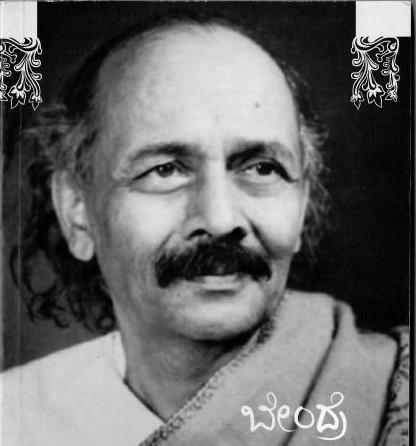
Go back a few decades, to the latter half of the 20th century, and you see something very similar, played out within the national context. From 1965-1999, the Jnanapith Award – often called India’s Literature Nobel – was given to Kannada literature seven times, the most given to any Indian language in that period. The recipients included Kuvempu (epic poet, novelist, and dramatist), Bendre (lyric poet), Shivarama Karanth (novelist and Yakshagana revivalist), and U. R. Ananthamurthy (short story writer and cultural critic). Though Kannada’s win rate has lessened considerably – Chandrashekara Kambara (poet, dramatist, and folklorist) is Kannada’s only Jnanapith award winner this century – it remains the language with the second highest number of Jnanapith awards, behind only Hindi.
What explains the continuing richness of Kannada literature at a time when Kannada speakers are feeling marginalised? Can Kannada’s literary tradition and history provide a way forward for the language today?
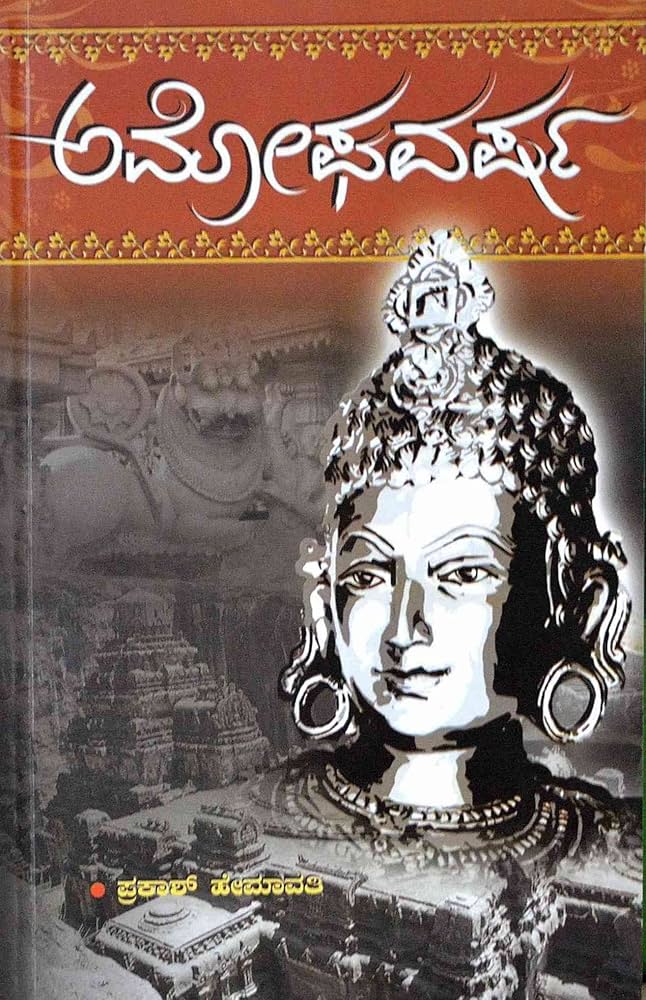
The beginnings of Kannada literature are generally dated to the composition of ಕವಿರಾಜಮಾರ್ಗ or Kavirājamārga, a text of poetics that translates as “The Way of the King of Poets”. Believed to have been written in the 9th century CE by Srivijaya, under the aegis of and possibly in collaboration with the Rashtrakuta emperor Amoghavarsha Nrupatunga, Kavirājamārga contains the following verse (1.36) –
ಪದನಱಿದು ನುಡಿಯಲುಂ ನುಡಿ / ದುದನಱಿದಾರಯಲುಮಾರ್ಪರಾ ನಾಡವರ್ಗಳ್ / ಚದುರರ್ ನಿಜದಿಂ ಕುಱತೋ / ದದೆಯುಂ ಕಾವ್ಯಪ್ರಯೋಗಪರಿಣತಮತಿಗಳ್
padanaṛidu nuḍiyalum nuḍi / dudanaṛidārayalumārparā nāḍavargaḷ / cadurar nijadim kuṛitō / dadeyum kāvyaprayōgapariṇatamatigaḷ
“Capable of grasping the felicity of what they are speaking about and capable too of understanding and analysing what is spoken, the people of that Kannada nāḍu (land) are adept enough to produce literature despite having no formal learning in it.”
Such praise in a text looking to justify its own literary standing might seem like self-aggrandisement, but there is enough objectivity in the whole of Kavirājamārga for us to accept this statement – if not at face value, then at least with a grain of salt. Because, within the obviously exaggerated claim that the entire populace of Kannada nadu can create poetry lies the more acceptable truth about the existence of a widespread and abundant “folk literature” and a people with literary inclinations. More than a millennium has passed since Kavirājamārga was composed and the Kannada land and people have suffered numerous upheavals in that period, but it would appear that the linguistic-cultural substratum that inspired Srivijaya-Amoghavarsha’s declaration retains the capacity to stimulate Kannada literary production, even in today’s less-than-favourable circumstances.
Another aspect of Kavirājamārga that has attracted scholars like Sheldon Pollock and D. R. Nagaraj, is its position as one of India’s earliest “vernacular” literary texts. Pollock, in particular, contends that Kavirājamārga “may in fact be the first work in world culture to constitute a vernacular poetics in direct confrontation with a cosmopolitan language.” [1] That cosmopolitan language is Sanskrit, upon which Pollock builds his hypothesis of a South Asia-encompassing “Sanskrit cosmopolis”. Though Pollock’s knowledge of Kannada is flimsy and the politics-related conclusions he has drawn have been contested, one can broadly agree with his claim that “a big part of what early Kannada literature is about is the possibility of making literature in Kannada.” That is to say, Kavirājamārga can be understood as an attempt to simultaneously create both a literature and a rubric for future literature in the Kannada language. Piquantly, in this endeavour, the text adopts a negotiatory approach with Sanskrit (and Prakrit) literature, an important part of which is the felicitous melding of the dēsi (~non-Sanskritized Kannada) idiom with the mārga (~Sanskritized) idiom. [2]
And there is a strong possibility that this relationship – of Kannada negotiating with a non-Kannada ethos rather than dominating it or insulating itself from it – is responsible for the state of present-day Kannada, as language, land, and people. That is to say, it is possible that the unceasing negotiation of Kannada with various ethoses, from at least the time of Kavirājamārga, has encoded the character of inclusiveness into Kannada’s very DNA. This inclusiveness has likely been challenged at various points, but it has managed to withstand a millennium’s worth of vicissitudes to make Karnataka “sarva janāngada shāntiya thōṭa” (a peaceful garden of all peoples)”, as Kuvempu wrote in a 1930s poem that would become the state’s official anthem. It has also, in my opinion, been the reason for the sustained excellence of Kannada literature over the last century, often led by people who spoke a different language at home.
Before elaborating on this, let us note that the idea of a maatru bhasha or “mother tongue” is a fairly recent Western import. U. R. Ananthamurthy, in a 2009 speech in New Delhi, rejected the idea of the “mother tongue” and spoke instead of the three languages most Indian people know: maney maathu, beedhi maatu, attada maathu – respectively “the language of the home”, “the lively speech of the street”, and “the language of the upstairs or refinement”. [3] This is an important distinction, since it reveals that India was and remains a plurilingual society rather than merely a multilingual one. And this plurilinguality and ease of movement across languages arguably reached its literary apotheosis in Kannada land, precisely because of the Kannada people’s inclusive temper. The Kavirājamārga says –
ಕಾವೇರಿಯಿಂದಮಾ ಗೋ /ದಾವರಿವರಮಿರ್ದ ನಾಡದಾ ಕನ್ನಡದೊಳ್ / ಭಾವಿಸಿದ ಜನಪದಂ ವಸು / ಧಾವಲಯವಿಲೀನವಿಶದವಿಷಯವಿಶೇಷಂ
kāvēriyindamā gō / dāvarivaramirda nāḍadā kannaḍadoḷ / bhāvisida janapadam vasu / dhāvalayavilīnavishadavishayavishesham
“The Kannada land is that which stretches from the Kaveri river to the Godavari river. That peopled land is a well-known region upon this earth.”
By pointing out that Kannada’s “bhāvisida janapadam” (the peopled land between the Kaveri and Godavari rivers) is a particular region upon the earth, Kavirājamārga is, per K. V. Subbanna’s reading, simultaneously localising and globalising. [4] That is, it is asserting not only that Kannada is contained within the globe but also that Kannada contains the globe. Subbanna contrasts this with the approach of Tolkāppiyam, a Tamil text from a few centuries earlier, which focuses exclusively on the Tamil language and its literature. He notes that the geography of the two languages – the Tamil country of the 1st millennium lay in a relatively isolated corner of the Indian peninsula while the Kannada country lay in a more central position – likely influenced the conception and spirit of the two texts.
◇◇◇
This ability of Kannada to “contain multitudes” allowed it to be all three types of language enumerated by Ananthamurthy – at different times to different people. To Srivijaya-Nrupatunga, who sought to make it the language of refinement, Kannada was most probably also the home language and the street language. For Pampa, who came a couple of generations after Kavirājamārga was composed and whose home language may have been Telugu, Kannada was ready for use as a refined language, though still dependent on Sanskrit for its cachet. However, by the 12th century, about 150 years after Pampa, desi Kannada had developed to the extent that it was ripe to produce literature in the form of vachanas (literally, “pronounced speech”), an enormously rich, candid, multifaceted, and often-oracular corpus of writing. This corpus would go on to spark a sociocultural revolution and have ramifications on Kannada’s literature in ways that extend up to the present.
Taking our cue from Pollock, we can use Kavirājamārga to theorise a “Kannada cosmopolis”. Although geographically much smaller than the Sanskrit cosmopolis, this Kannada cosmopolis was and is distinguished by its inclusiveness, its low barrier to entry, and Kannada’s position as ‘the language of the street’ and ‘the language of refinement’, a position consolidated by the vachana movement.
Validation of such a Kannada cosmopolis, at least in the form of what Subbanna calls the “cit-jagattu (world of the imagination/consciousness)”, can be found not just in the superbly demo(cra)tic vachana literature, but also in the plurilinguality of Kannada nadu, both of Kavirājamārga’s time and of the present. As Subbanna notes, unlike the Indian constitution, Kavirājamārga did not use royal fiat to demarcate or declare a Kannada-language kingdom. In fact, writing at the turn of the millennium, Subbanna argues that Kannada’s position at the time Kavirājamārga was composed was likely much more dire than it is now. But, he says, Kavirājamārga accepted the situation calmly, never doubting Kannada’s “sthairya”, its determination of purpose.
More than a millennium hence, Kavirājamārga’s wisdom has been proven right. Indeed, it may be argued that Kavirājamārga basically conceptualised a Kannada cosmopolis. Which is why it is no surprise that Bengaluru, the capital city of the state of Karnataka, has come to be the most multi- and plurilingual city in 21st-century India. Amateur historians of Bengaluru, especially those who do not know Kannada, like to talk about how “Bengaluru has always been multilingual”, which is usually their way of justifying their ignorance of Kannada and pretending as if Bengaluru’s centuries-old history is not rooted in the Kannada language.
What they do not recognise (because they do not seek) is that Bengaluru’s current situation is not so much the result of its pleasant weather or its history as a British cantonment as it is the direct consequence of being situated within the (plurilingual) Kannada cosmopolis. Because, while many of India’s linguistic peoples would, I am sure, claim their own cosmopolis (like, say, the Tamil cosmopolis or the Bengali cosmopolis), none of these possess the combination of attributes that make the Kannada cosmopolis so special, namely – a millennium-old literary text like Kavirājamārga, a hoary history of negotiatory (Kannada-first) plurilingualism, and an astonishing penchant among its speakers to be inclusive without being dominating.
◇◇◇
The existence of such a Kannada cosmopolis also elucidates what I consider one of the most interesting phenomena of modern India, namely the plurilingual nature of the Kannada renaissance of the 19th century – especially in the literary sphere.
From Rev. Ferdinand Kittel, a German missionary who became the pre-eminent bhasha lexicographer and compiled the unequalled Kannada-English dictionary to B. L. Rice, a Bangalore-born Englishman, responsible for compiling the multi-volume Epigraphia Carnatica and translating almost 9000 inscriptions across Karnataka, which was “the first such intensive and systematic survey of inscriptions in India”; from M. Vishveshvarayya, maybe India’s most celebrated engineer, “the maker of modern Mysore”, and one of the founders of the Kannada Sahitya Parishat to Govinda Pai, a pioneer of modern Kannada poetry and Kannada’s first “Rashtrakavi” or national poet; from T. P. Kailasam, the originator of modern realism in Kannada drama to Da Ra Bendre, the varakavi (heaven-touched poet) of 20th-century Kannada literature and Jnanapith awardee; from Na. Kasturi, one of 20th-century Kannada’s best-known humorists, to Nisar Ahmed, one of Kannada’s most popular modern poets and creator of Nityotsava, Kannada’s unofficial state anthem — a remarkable number of the makers of modern Kannada literature spoke a non-Kannada home language.
Although this is not an uncommon phenomenon in India – as it is in, say, modern Europe or Africa – I do not believe any other indigenous Indian bhasha has produced as many important writers who spoke a different home language (or, per the census, a different “mother tongue”). And this phenomenon continues, decades after the formation of India’s linguistic states and a marked decrease in cross-bhasha bilingualism. Some of contemporary Kannada’s most notable literature continues to be produced by men and women whose home language is not Kannada, simply because they fully partake in the spirit of the Kannada cosmopolis. Examples include Jayant Kaikini, Banu Mushtaq, Nagaraj Vastare, and Abdul Rasheed. In fact, Kaikini and Mushtaq being Kannada literature’s two international prize winners points to yet another negotiation by Kannada, this time with the global English cosmopolis.
If we accept that great literature, especially great poetry, is the zenith of a language-based culture, we also accept the presence of a foundation within that culture that supports such ascension. In Kannada’s case, it implies that the distinctive plurilingualism of its literary production is the epitome of a more pervasive “grassroots” plurilingualism. This is backed up by the numbers: the 2011 census showed Kannada was the second language of more than 14 million people, the highest for any language besides Hindi.
◇◇◇
The rarity of something like the Kannada cosmopolis is precisely why it is so important to protect and nurture its essence. As migration into Karnataka, especially Bengaluru, increases and the millennium-old cosmopolis is subjected to hitherto unseen economic pressures, language-based groupism, and a repudiation of plurilinguality, the Kannada people would do well to take inspiration from Kannada’s literary production to negotiate the primacy of an inclusive Kannadatva (Kannadaness).
It is paradoxical that, at the same time that Kannada speakers, especially in Bengaluru, are protesting about being marginalised and Kannada-medium schools are shutting down en masse across the state, Kannada literature is riding the crest of a wave of global interest in translated bhasha literature, i.e. Indian “vernacular” literature.
I will leave the last word to Bendre, the greatest Kannada poet of the 20th century –
ಕನ್ನಡದ ಜೀವಲಹರಿ
ಇದು ವೈಷ್ಣವ ಇದು ಜೈನವು ಇದು ಶಾಕ್ತವು ಶೈವ
ಇದು ಜೀವನು ಇದು ಜೀವನ–ಪುರುಷಾರ್ಥವು ದೈವ
ಒಮ್ಮುಖವಿದು ಹಲಮೊಗದೊಲು ತೋರುವ ತರತಮತೆ
ಇದು ನಿಮ್ಮದು, ಇದು ನಮ್ಮದು, ಇದು ಎಲ್ಲರ ಮಮತೆ.
ಇದು ಮಣ್ಣಿನ ನರುಮಲ್ಲಿಗೆ, ಇದು ನೆಲದ ನಿಧಾನ
ಇದು ರಸವನೆ ಹೊರದೋರುವ ನಾಟಕದ ವಿಧಾನ
ನಶ್ವರದಲಿ ಮೂಡಿಹುದಿದು ಶಾಶ್ವತೆಯ ಚಿತ್ರ
ಇದೆ ಇಲ್ಲೆಂಬುವ ವಾದವ ಇಂಗಿಸುವ ವಿಚಿತ್ರ.
idu vaiśṇava idu jainavu idu ṣāktavu ṣaiva
idu jīvanu idu jīvana-puruśārthavu daiva
ommukhavidu halamogadolu tōruva taratamate
idu nimmadu, idu nammadu, idu ellara mamate.
idu maṇṇina narumallige, idu nelada nidhāna
idu rasavane horadōruva nāṭakada vidhāna
nashvaradali mūḍihudidu ṣaṣvateya citra
ide illembuva vādava ingisuva vicitra.
The Kannada Lifestream
This is the Vishnu-path, the Jaina-way, the Shakti-path, the Shaiva-way;
this is the living-way, the goal of life, this is the fated destiny;
this is a unity that shows itself in many-faced distinctions;
this is yours, and this is ours, this is all of our affection.
This is the jasmine of the soil, the patient earth’s considered way;
this is the manner in which the rasa’s shown in a drama-play;
eternity’s picture has been born on fleetingness’s canvas;
a wonder that quells argument between what isn’t and what is.
- Madhav Ajjampur is a Bengaluru-based writer and translator. He writes original prose and poetry in English and translates from Kannada to English. He is the author of The Pollen Waits On Tiptoe, a multimedia book containing his English translations of selected Kannada poems by Da Ra Bendre.
[1] Pollock, Sheldon. “The Cosmopolitan Vernacular.” The Journal of Asian Studies. 1998.
[2] Srivijaya. Kavirajamargam: The Way of the King of Poets. Edited and translated by R.V.S. Sundaram and Deven M. Patel. Manohar Publishers, 2017.
[3] Ananthamurthy, U.R. “Words and the World.” India International Centre Quarterly. 2009.
[4] Subbanna, K.V. Kavirajamarga Mattu Kannada Jagattu [Kavirajamarga and the Kannada World]. Akshara Prakashana, 2000.