Space Girls Redefine the Future
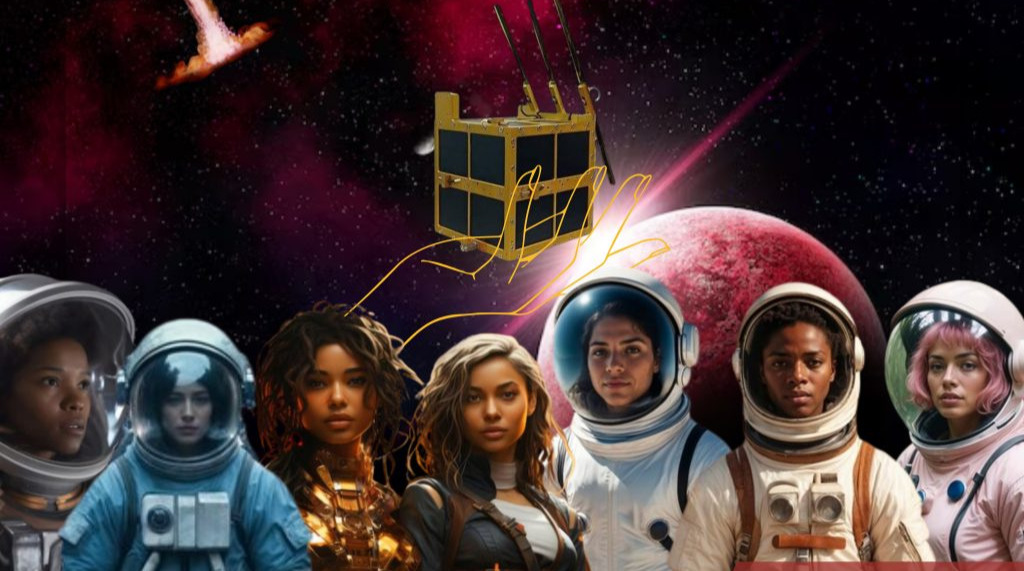
What does it take to convince a girl from a remote village that she belongs in space? Dr Srimathy Kesan’s Space Kidz India is answering this question by turning thousands of girls into space scientists. By championing students from underserved communities, she has turned the ‘impossible’ into reality, proving that opportunity, not privilege – is the driving force behind modern innovation.
I have always believed that space technology is not something reserved only for students in plush, elite universities. It belongs just as much to a child in the remotest corner of our country. It is the belief we place in them and the opportunities we provide that elevate them to extraordinary heights.
One such story is that of Vidya Gagare, a fourteen-year-old girl from Kolhar Budruk in Maharashtra’s Ahmednagar district. The daughter of a driver, Vidya was among the 750 girls selected from government schools across India to participate in the AzaadiSAT Mission. As a Class 9 student, she learned coding, worked on printed circuit boards, and helped program sensors designed to operate in space. What began as a classroom opportunity soon became a historic achievement when the satellite carrying her work was successfully launched aboard ISRO’s SSLV-D2 mission. For Vidya, a dream that once seemed distant suddenly became real. For me, her success reaffirmed a truth that has guided Space Kidz India from the beginning: talent is never limited by geography, economic background, or circumstance.
Another inspiring story is that of Kushboo, a courageous young participant whose determination captured the very essence of what we strive to achieve. From an early age, she dreamed of serving the nation as a fighter pilot. Through the AzaadiSAT Mission, she was introduced to the world of science, technology, and innovation. She discovered that dreams do not become reality through privilege; they become reality through perseverance, learning, and opportunity. Today, she continues her studies with unwavering determination, carrying forward the confidence and inspiration she gained through her experience. Her journey reminds me that every girl deserves the opportunity to discover her potential and define her own future.
Yet some stories transcend individual success and become symbols of social transformation. I remember a young girl from a tiny village in Tamil Nadu whose parents worked as daily wage labourers. Her family faced relentless criticism simply because they chose to educate their daughter. Villagers questioned why a girl needed to learn about satellites, rockets, or Sriharikota. They mocked the family’s aspirations and treated them as outsiders. But they refused to surrender their dreams. When the girl’s achievements through our mission began receiving national attention, everything changed. The Education Minister personally visited her village to honour her accomplishments. Television channels carried her story across the state. The same people who once doubted her abilities now celebrated her success.
Watching that transformation, I realised that when one girl succeeds, she does not merely change her own life; she changes the mindset of an entire community. I also remember two extraordinary girls from Kashmir. Among several students selected for the mission, they faced enormous challenges due to connectivity restrictions and difficult local circumstances. Yet they were determined not to let those obstacles define them. To access their satellite training lessons, they would walk down from the mountains searching for an internet signal. Eventually, they found connectivity near a temple in the valley. Sitting on its steps, often for hours, they completed lessons on coding, electronics, and satellite systems. While many students take internet access for granted, these girls crossed mountains simply for the opportunity to learn. Their determination remains one of the most powerful examples of resilience I have ever witnessed.
Another unforgettable moment came from Ladol village in Gujarat. A young girl from a humble rural background was entrusted with presenting our student satellite project directly to Prime Minister Narendra Modi, Union Home Minister Amit Shah, and senior national leaders during the inauguration of the IN-SPACe headquarters. With remarkable confidence and clarity, she explained the project and the role of students in India’s growing space ecosystem. Her presentation left a lasting impression. The Prime Minister later spoke about her achievements with pride in Mann Ki Baat, inspiring millions across the country. Watching her stand before the nation’s highest leaders, I felt immense pride—not because of the recognition itself, but because it proved that greatness can emerge from any village, any school, and any child when given the opportunity to flourish.
Perhaps the most emotional moment in our journey came during the SSLV-D1 mission. When the mission fell short of placing its payload into the intended orbit, heartbreak spread through the team. Many of the girls broke down in tears. Years of learning, effort, hope, and anticipation seemed to disappear in a single moment. Yet what happened next revealed the true success of the mission. The girls gathered around one another. They held hands, wiped away tears, and comforted each other. “You taught us to be brave,” they said. “We are together. We will succeed.” At that moment, the mission ceased to be merely about a satellite. It became a sisterhood. It became a lesson in resilience. It became proof that true success is not measured by avoiding failure but by finding the strength to rise again after it.
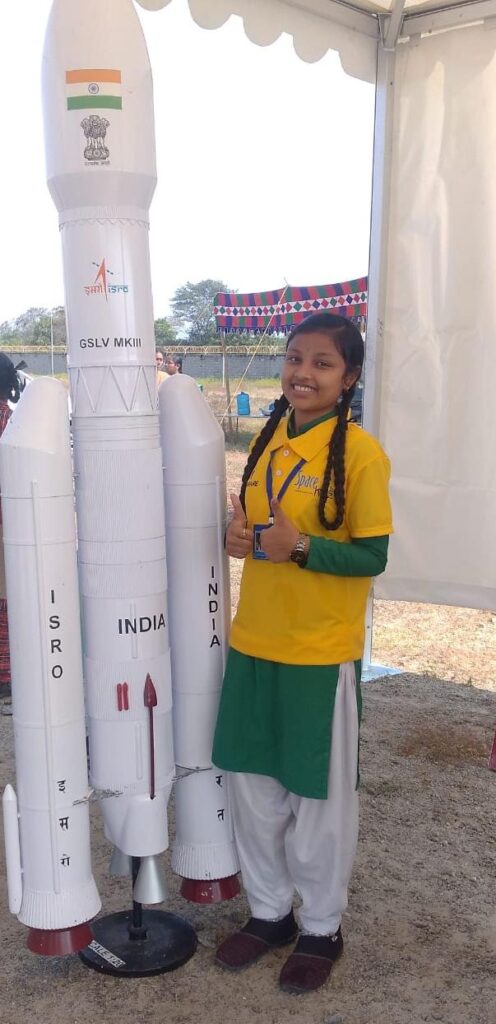
These stories represent hundreds of girls whose lives have been transformed through the AzaadiSAT Mission. They came from villages, towns, government schools, underserved communities, and challenging circumstances. Yet they proved that innovation is driven not by privilege, but by curiosity, courage, determination, and opportunity.
When I conceptualised Space Kidz India in 2010, my vision was to democratise access to space science. I had met brilliant children from villages, towns, government schools and underserved communities whose curiosity knew no bounds, but whose access to opportunities was painfully limited. I met girls who were told that science was not meant for them. I met students who believed that satellites, rockets and space exploration belonged only to scientists in laboratories, elite universities or wealthy nations. What they lacked was not intelligence, passion or ambition. What they lacked was someone who believed in them.
Space Kidz India aimed to change that reality. I wanted every child, regardless of gender, geography, language or socioeconomic background, to know that space belongs to them too. What began as a small initiative to create awareness about science and space technology has, over the past decade, grown into one of India’s leading space education organisations. Through hands-on workshops, student satellite missions and collaborations with national and international space agencies, we have enabled thousands of young people to participate in real scientific missions, giving them opportunities that many never imagined possible. Along the way, our students have built record-setting satellites, including KalamSat, the world’s lightest satellite, contributed to missions such as AzaadiSAT and SD SAT, and today are preparing for Mission ShakthiSAT, which aims to bring together 12,000 girls from 108 countries in a historic lunar mission. Yet beyond the launches, records and milestones, our greatest achievement has always been the confidence we ignite in young minds.
Over the years, Space Kidz India has reached more than 100 million children through its space education and STEM outreach initiatives, taking the excitement of science beyond classrooms and into communities across India and around the world. Yet numbers tell only part of the story. The true measure of our impact lies in the journeys these young minds embark upon. Today, many of our alumni are pursuing higher education and careers in science, engineering, and aerospace. Some have gone on to establish start-ups developing drone technology and other cutting-edge innovations, while countless girls who once believed that science was beyond their reach have chosen STEM disciplines with confidence. Watching these young dreamers grow into innovators, entrepreneurs, and changemakers has been far more rewarding than any satellite launch.
My vision has always extended far beyond launching satellites. I envision a future where space serves as a platform for peace, collaboration, innovation, and human progress. The next giant leap for humanity will not be defined solely by how far we travel into space but by how many people we bring along on that journey. Today, that vision is embodied in Mission ShakthiSAT, our most ambitious initiative yet. Mission ShakthiSAT seeks to unite 12,000 girls from 108 countries in a historic lunar mission, creating an unprecedented global movement for women in science, technology, leadership, and space exploration.
Looking back, I realise that Space Kidz India has never been about satellites alone. Every launch represents a child who discovered confidence, a girl who found her voice, or a family that began to believe that the impossible could become possible. Awards, records and recognitions are gratifying, but they have never been our destination.
Our greatest achievement will always be the lives we transform, the barriers we break, the confidence we nurture and the dreams we help realise. We began by launching student dreams into space. Today, we are helping shape a generation that believes no dream is beyond its reach. As long as there is a child who dares to dream, our mission will continue—because the sky is no longer the limit.
“Dr Srimathy has been a constant source of inspiration to me. She has shown girls like me that there are no limits to what we can achieve if we dare to dream. Being part of Mission ShakthiSAT has inspired me in ways I never imagined, and one day I hope to work alongside her to help many more girls reach for the sky.”
— Drejil Kurrey, Class 11, New Delhi
“Growing up in Botswana, I often felt that careers like medicine and law were considered the only paths to success. But I was always fascinated by mathematics, space and the possibilities beyond our world. After completing my IGCSE with excellent results, I was searching for my true calling when I discovered Mission ShakthiSAT. It gave me the opportunity to channel my curiosity into something meaningful and showed me that a career in aerospace was within reach. I hope this journey will not only help me realise my own dreams but also inspire more girls in Botswana to believe that they, too, can reach for the stars.”
— Gogontle Moseja, 17, Botswana
“People often ask me why I founded Space Kidz India. My answer has always been simple: because I believe talent is universal, but opportunity is not.”
— Dr Srimathy Kesan

Dr Srimathy Kesan is the Founder and CEO of Space Kidz India, which is pioneering aerospace innovation and inspiring the next generation of space explorers.
#Empowering Girls#Innovation#SpaceKidz#Srimathy Kesan#Technology