What Rome and Bengaluru Taught Me About Time
Romicon Revola traces a personal journey from Bengaluru to Rome, and the unexpected lessons two very different cities taught her about permanence and change.
When I was a young artist starting out in Bengaluru, people would often ask me why I chose sculpture. My answer was always ready: I wanted to create monuments that would last beyond my lifetime.
It was an audacious answer. It was also innocent.
I imagined the great monuments of history—the Colosseum, pyramids, structures that had survived centuries and carried within them the stories of generations. As a sculptor, there was something deeply romantic about the idea of creating something permanent, something that would remain long after the hands that made it were gone.
Fifteen years later, I smile when I think about that younger version of myself.
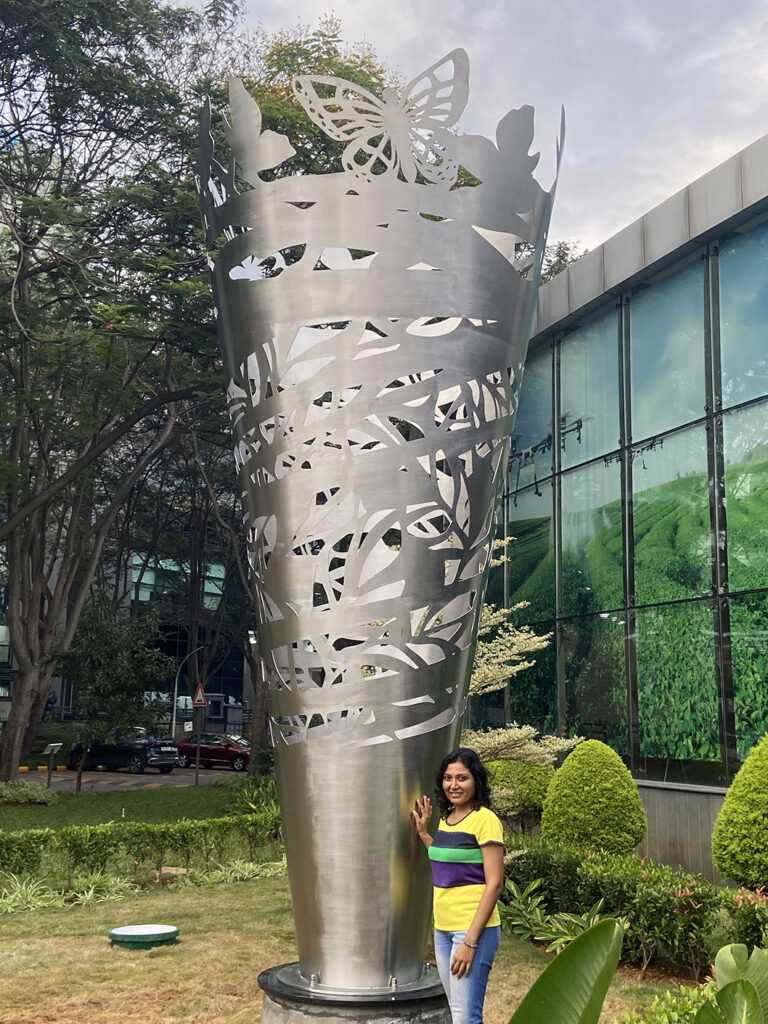
Some of the sculptures I created for Bengaluru no longer stand where I placed them. A few were uprooted to make way for Metro lines, flyovers and road expansion. Some disappeared because the developer decided the landscape needed a makeover after a decade or so. At one point, perhaps, I might have felt disappointed. Today, I find myself surprisingly accepting of it.
Because I understand Bengaluru better now.
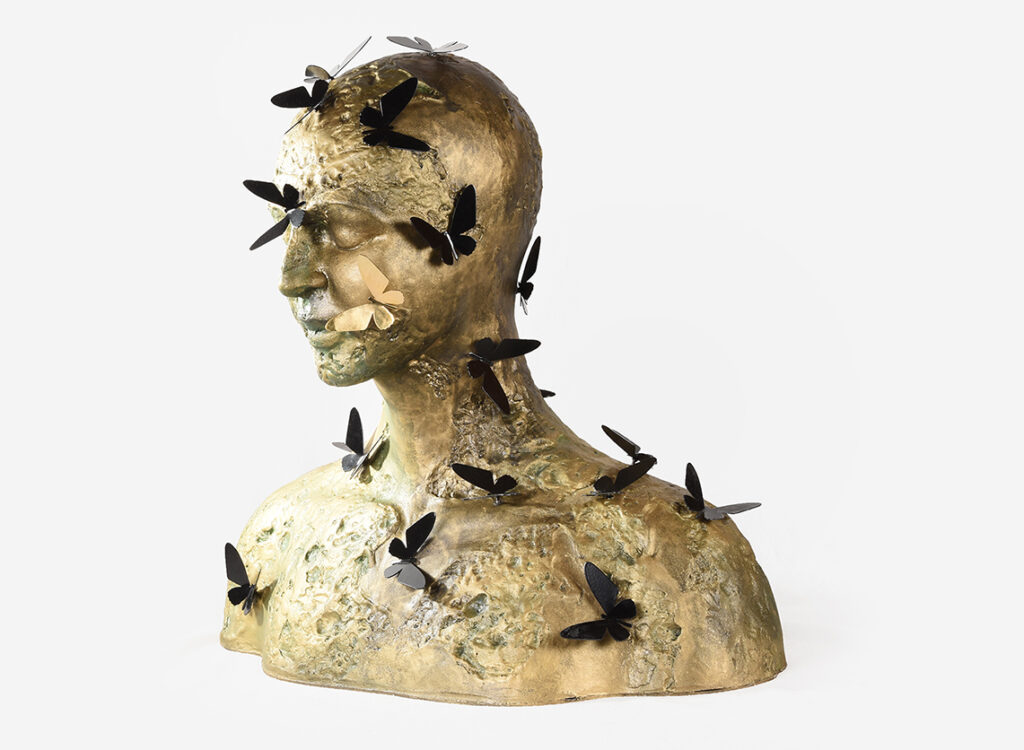
Bengaluru is a city in constant motion. When I began my artistic journey, it was still called Bangalore. It was a city transforming rapidly, but the scale of change we see today was only beginning. My early interactions with Mr. Jaishankar of Brigade Group, the Virwanis of Embassy Constructions, and other developers led to memorable collaborations where I created large-scale outdoor sculptures for tech parks, corporate campuses, and public spaces that became part of Bengaluru’s real estate transformation.
In many ways, my own artistic journey grew alongside the city.
But Bengaluru, like most Indian cities today, is in a state of flux. There is a constant hunger to grow, to expand, to rebuild, while catering to a burgeoning population. Roads become flyovers. Empty plots become technology parks. Familiar landscapes disappear and new ones emerge. Standing still is not an option.
For a young artist obsessed with permanence, this was perhaps the most difficult lesson to learn.
And then I moved to Rome.
I did not immediately appreciate Rome when I arrived. In fact, I moved here with my husband, who is Italian, since he had to relocate. My heart was still somewhere else. I loved Paris and constantly compared Rome to it. I adored the leafy boulevards, the leisurely walks along the Seine, and picnicking in a garden with a croissant in hand. Looking back, I was probably a little too influenced by Emily in Paris.
Rome, at first, did not match that romantic image.
I live in the Roman countryside, away from the famous monuments and postcard views, and we have a wonderful life here. Our home is surrounded by greenery. We are close to beautiful agriturismo restaurants with incredible food. On weekends, I love exploring medieval borghi, wandering through small towns and discovering places that seem untouched by time.
Living in the north of Rome means living among layers of history. There are Etruscan remains, Roman ruins, medieval villages and traces of the many civilizations that have shaped this landscape. History here is not confined to museums. It is everywhere.
But I still did not fully understand Rome.
I travelled to Turin and a few other Italian cities. I expected to be enchanted, but I found myself missing Rome. Turin was elegant and beautiful in its own way, but it felt more orderly, more urban, more contained. Even its historic centre, while impressive, did not give me the same sense of discovery that Rome constantly offers.
When I returned to Rome, something suddenly clicked. Rome is unique. There is no other place quite like it.
The city is a history lover’s treasure chest. It is impossible to walk through Rome without encountering the remains of another era, often many different eras all at once. I have visited countless churches, monuments and archaeological sites, yet there is still so much left to discover. There are corners I have not explored, palazzos I have not entered, courtyards I have not wandered into.
That sense of discovery is what I love most about living here. Rome constantly reveals itself.
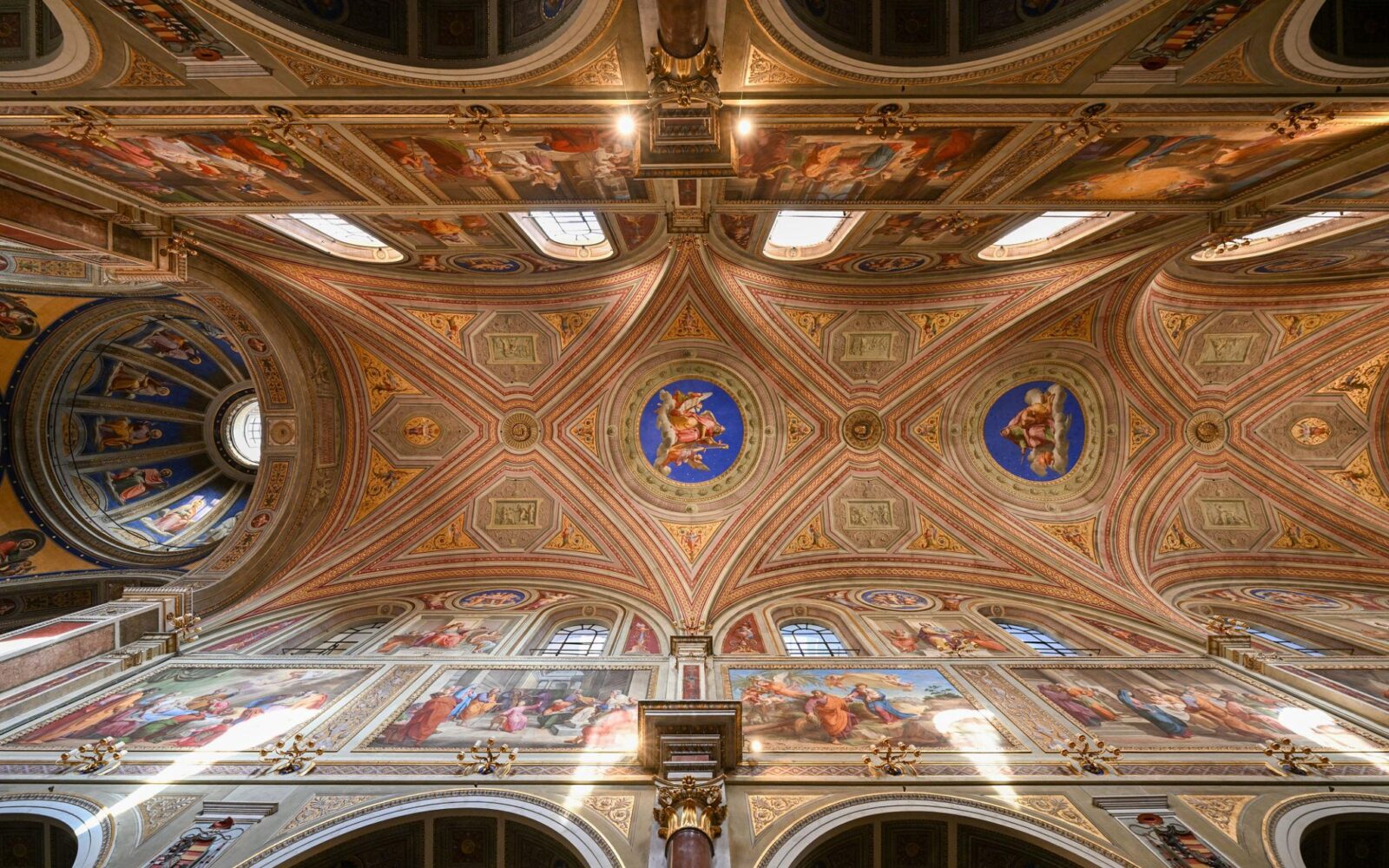
I love walking around the historic centre with my local friends. We wander without a strict plan, find a place for lunch, and on the way to get gelato, we might suddenly walk into a church simply because we are curious. Behind an ordinary doorway, we discover a magnificent frescoed ceiling. A small chapel near Piazza Navona reveals a Caravaggio. A visit to Santa Cecilia in Trastevere leads us to a beautifully decorated crypt.
In Rome, the extraordinary often does not announce itself. It simply waits patiently for someone to look closer, behind an old door or along a non-descript pathway.
The medieval borghi around Rome are another delight. Calcatta, Nepi, Sutri, San Lorenzo near Lago di Bolsena—the countryside around this city offers endless surprises. Even something as mundane as driving somewhere to fill petrol can become an unexpected journey. You turn onto a beautiful pine-tree-lined road and suddenly realise you are passing ancient ruins that have existed for two thousand years.
This is Rome. Most tourists may never go beyond Piazza di Spagna, the Trevi Fountain, the Colosseum or Trastevere. They may leave knowing that Rome is rich in art, history and culture, but also feeling that it is crowded and overwhelming.
But Rome is much larger than its historic centre within the Aurelian Walls.
We often say, “all roads lead to Rome.” Living here, I have realised that all those roads are worth exploring too. They reveal a different Rome—a mosaic of landscapes, villages, archaeological sites, farms and everyday experiences.
Perhaps this is also why living here has changed the way I see the Colosseum.
Before moving to Rome, the Colosseum represented everything I admired as a sculptor. It was the ultimate symbol of permanence. A structure that had survived nearly two thousand years. A monument created through extraordinary vision, engineering and human labour.
I still feel immense respect for it. But I see it differently now.
I am also aware that this magnificent monument was once a place of death and spectacle. In those times, people did not have television, cinema or Netflix to watch fictional crime dramas and violence from the safety of their homes. They experienced spectacle in its most visceral form, as something real and immediate.
The Colosseum is both a masterpiece and a reminder of the complexity of human history.
Living in Rome has taught me that monuments are never just about permanence. They are about memory. They carry the achievements, contradictions and values of the societies that created them.
And perhaps that is the lesson I needed as an artist.
I once believed that the greatest achievement was to create something that would outlive me. Today, I am not so sure.
A work of art does not become meaningless because it does not survive forever. Perhaps there is also beauty in creating something that belongs completely to its moment—to a particular place, a particular community and a particular chapter in a city’s story.
When I returned to Bengaluru after a long absence, I worried that I might struggle to adjust. Instead, I slipped right back into its rhythm. Despite everything that had changed, it was still home. As my taxi weaved its way home from the airport in the early morning before the traffic peaked, I passed through Hebbal, Chalukya Circle, Cubbon Park and various neighbourhoods and started remembering all the sculptures I had created along the route. Some are still there, some gone.
Rome taught me to appreciate what survives. Bengaluru taught me to accept what changes.
One city carries centuries of history almost visibly in its streets. The other is constantly rebuilding itself for the future. One preserves layers; the other creates new ones at extraordinary speed.
And somewhere between these two cities, my own understanding of permanence has changed.
I no longer need my work to last forever. Perhaps it is enough that, for a moment in time, it becomes part of a city’s story.
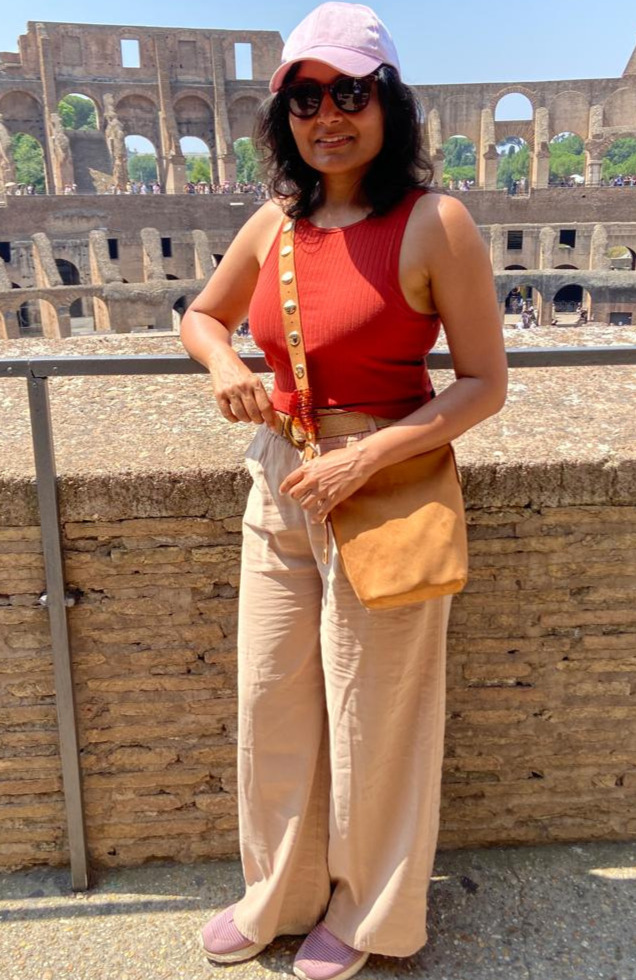
Romicon Revola a.k.a. Romi is a Bengaluru-born visual artist and sculptor known for her large-scale public sculptures, installations, and interactive artworks. She divides her time between Bengaluru and Rome, where she continues her artistic practice while working on projects and collaborations across India and Europe.
#Architecture#Art#Bengaluru#Rome#Sculptures#Time#Urban Spaces