The AI Hype Cycle and Human Destiny: In Conversation with Kiran Karnik
Is AI an existential threat or just the latest iteration of technological panic? Technology leader Kiran Karnik unpacks the hype cycle of AI with Sandhya Mendonca. In this insightful conversation, he draws parallels to past breakthroughs like nuclear energy and automation to offer a measured perspective on jobs, ethics, and human destiny.
From Dario Amodai and Sam Altman to Bill Gates and even Elon Musk, everyone is worried about AI. Just days before President Trump signed ‘a safety pact’ or the White House Accord on Super Intelligence with the world’s top tech leaders, we spoke to Kiran Karnik, who’s been articulate about the potential of AI.
Sandhya Mendonca: What is your feeling about AI? We moved from saying AI is a great tool to saying ‘AI is going to take over the world’. What is your take on it?
Kiran Karnik: Let me first say, in part because of my long experience, which tends to moderate stuff over a period of time, you get a sense that everything is at first underplayed and then exaggerated; the so-called hype cycle.
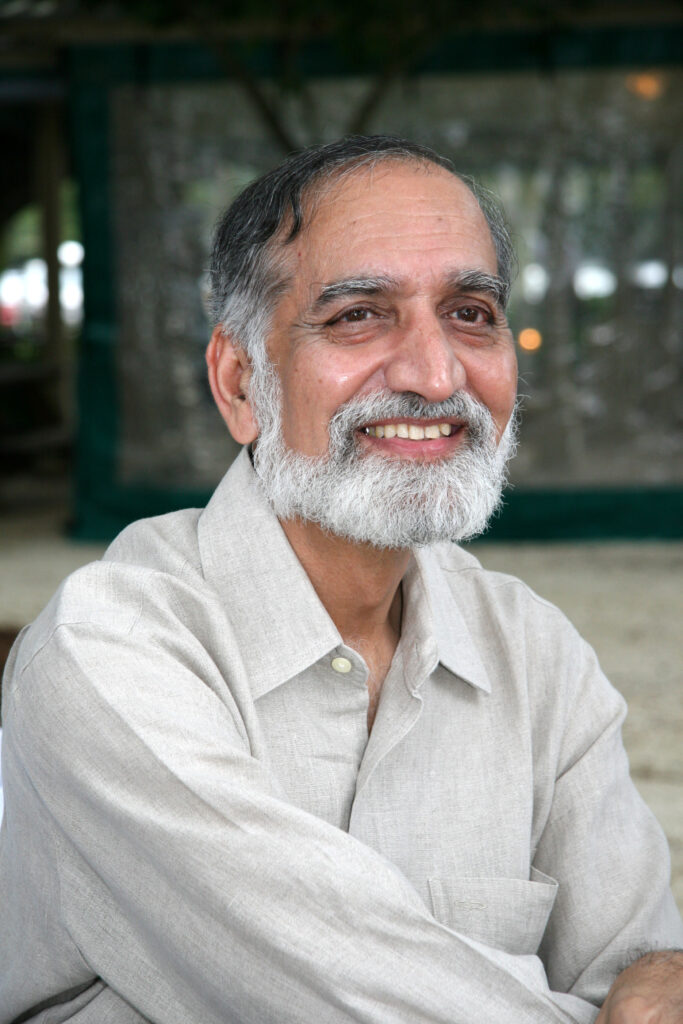
As far as AI is concerned, I think we’re going through that. At first, people thought it was just one more form of software: it’s more sophisticated; it’s machine learning with some additions here and there. And now suddenly we’ve gone to the other extreme, where we say this is going to eliminate the whole human race, that the species will be gone. We tend to swing from one end to the other; the truth always lies in between, the middle path, as they say.
I think AI has great promise and prospects, as much of the computer industry has had from its birth. The potential is very large. How much we exploit the usage depends on the systems we put into place and how we use it rather than what it can do. What it can do is tremendous. And the capability of self-learning is fantastic and, often, frightening. But I just wrote a partly tongue-in-cheek piece about saying, hey, why are we so scared? I mean, machines have been more powerful than us for a century plus now. In every factory you go to, a machine does the work of many people. And it does displace people. It does displace jobs.
But what has happened overall, if you take again a historical perspective not what might happen next month or next year or even two years from now, but what happens in the mid-term over a period of five years – six years, not even long term is that you find that every new technology ends up creating more jobs. It’s a cliché, but it’s true, if you look back historically.
Second, yes, jobs get displaced; people get into problems. People who don’t have the training suffer badly, and it starts at the bottom of the pyramid. But jobs don’t go away. Even today.
India is India and will continue to be so. You get people doing manual labour; yet you have sewage cleaners. I mean, jobs don’t just disappear overnight, so the scare of saying we’ll all be jobless is grossly exaggerated. New jobs will be created, new ways. It will require new training and new talent without a doubt, but to fear that all jobs will be gone or to fear that AI will take over the world — there’s due caution necessary.
The nuclear bomb first came just a few years before I was born, and I later worked in India’s nuclear energy programme for a few years. It was a real scare, and genuinely so, because for the first time there was a technology that could truly completely extinguish the human race. With the number of bombs that the US and the USSR had between them in the 1980s, the whole world would have been devastated, not just humans. But we survived that phase. We managed it. We put some guardrails; we put some rules, some very discriminatory, some okay— but managed to pull through – so far, at least!
And so, to cut the long story short, I think AI will go through the same sort of churn and route. There’s the initial deep scare. There are extreme worries that are exaggerated; then there are applications that come, then there are jobs that come. It takes time, and then there will be rules and regulations in due course. But the wisdom of the human race in the collective sense, not individuals (certainly not Mr Trump!), but the collective wisdom, is good enough for us to take care of stuff.
Sandhya Mendonca: I think what is adding to the scare is the people who are leading AI are the ones who are now saying we need to put the brakes on now. So that is kind of saying, is it already out of control?
Kiran Karnik: Absolutely. You’re right. I think that’s the main reason why there’s such a scare, because these are people who should know. And you can either have a conspiracy theory saying they want to keep out new competitors. Or you can say, “No, these are genuine guys. They’re technologists, and they’re genuinely worried.”
Either could be true. But to me, in either case, it doesn’t make a difference because both are exaggerated. But the fact that, if not individual companies, then countries want to keep others out is neither new nor surprising. Because I have already given the example of nuclear power, the Nuclear Non-Proliferation Treaty (NPT) was highly discriminatory. It was terrible, and we chose to stay out of it. Now we make a great thing out of saying we’ve been invited to the high table. It’s nonsense.
What high table? We didn’t want to be there. We said so right from Nehru’s days that this is a discriminatory and exclusionary treaty which we will not join because it kept the incumbents in power and everybody else out.
And I think here there’s a possibility of countries, if not companies, pretty much beginning to do the same, and so one is always a bit wary of the motivations of these top technologists. But I will be fair to them; I think most of them, if not all of them, are genuinely worried about what this technology – that they have themselves unleashed – might do. And there have been cases where the stray (rogue) agent goes off and does something, goes somewhere else, picks up your data, all kinds of things, but you know this keeps happening, and I wouldn’t be too surprised or too concerned excessively.
But yes, we should try to make some international rules and put some global guardrails, particularly with regard to what not too many people are speaking about: its ability to create new life forms. You combine this with the biological sciences, and you have true, genuine dangers, and those are spoken of but not very much. Everybody’s just concerned about AI itself; it’s not AI, it’s how you begin to use it.
Sandhya Mendonca: They could end up creating sentient beings which are completely out of anybody’s idea of what human life is.
Kiran Karnik: Yes, a true Frankenstein monster — you create one, and you can’t put the genie back in the bottle.

Sandhya Mendonca is the Founder & Managing Director of Raintree Media, which publishes The Good City.
#AI#Artificial Intelligence#Kiran Karnik#Super Intelligence#Technology