In Bengaluru, We Are Alone, Together
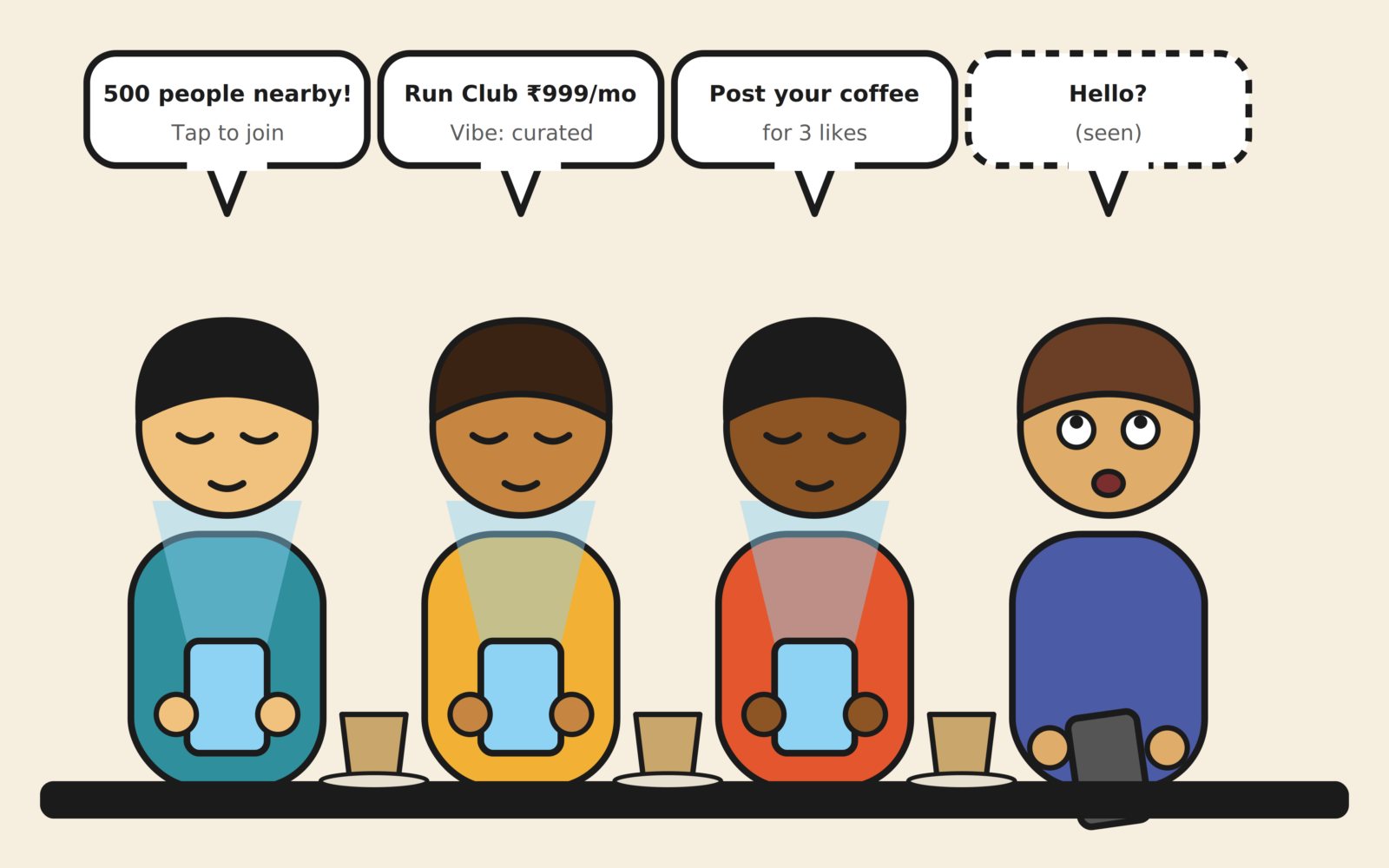
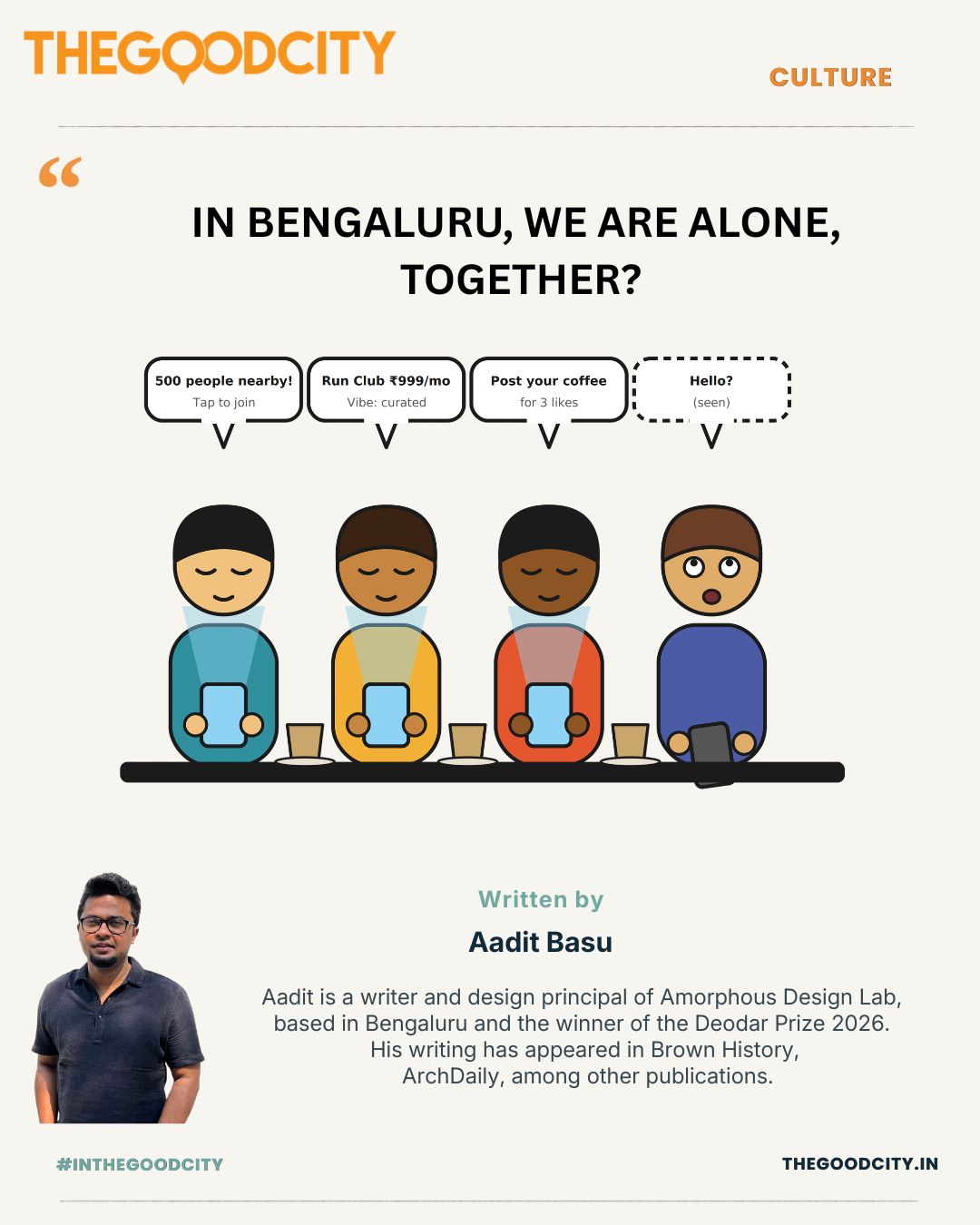
Bengaluru promises instant community at the tap of an app. But in a city engineered for optimisation and constant reinvention, are we building genuine connections—or just monetising and performing them, asks Aadit Basu.
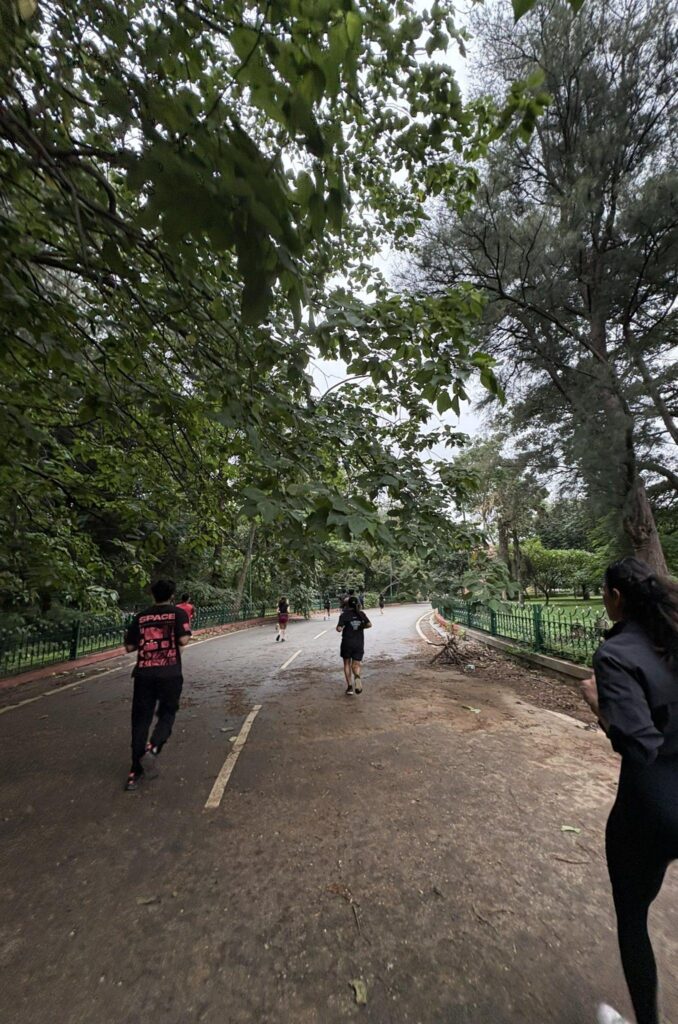
In Bengaluru, you can pay to hear an astrophysicist lecture in a pub, beer in hand. You can jog through Cubbon Park on a Sunday with people who look straight out of Instagram, and by the time the trail ends, you have LinkedIn requests. You can learn to make sushi. You can play badminton with strangers and then book a table to dine with them.
India’s Silicon Valley seems to have found an antidote to something: a cynic might call it loneliness, a sociologist might call it alienation. The people organising these events call it community building.
Today, you can find belonging, or at least a semblance of it, through an app. And there is nothing inherently wrong with that. As modes of communication have evolved, so have the ways in which communities form. People have always found one another through shared interests, whether in neighbourhoods, clubs, or libraries. Print expanded the possibilities of finding people beyond our immediate surroundings. Broadcasting created mass audiences around shared experiences. Then came the internet, with its ability to connect people across geographies and, increasingly, with pinpoint accuracy.
But the question today is no longer simply how we find belonging. It is whether we have begun performing it. Have we optimised belonging, turned it into something we can package and monetise? And Bengaluru, I believe, is at the heart of this experiment.
Few other Indian cities have technology embedded in their public memory quite the way Bengaluru does. When I call Bengaluru “high tech”, I don’t mean that groundbreaking technologies were necessarily born here. I mean that a large section of its population believes in technology, perhaps a little too much. It can solve anything. It is almost as if the city’s muscle memory instinctively reaches for a technological solution to every problem. But loneliness isn’t a logistical problem to solve.
Go to a startup event in Koramangala, amidst a sea of similar ideas, and you will find the founders speaking a similar language. A volley of “vision”, “bro”, “optimise”, and the new favourite, “AI”. There is no harm in being a little fluid in social interactions to fit in. But what is happening here feels different. With the collapse of the line between the digital and the physical, we have become hyperaware of the language, mannerisms, and idiosyncrasies that make us legible to one another. We arrive at a community already equipped with what it takes to be accepted. Could this be why so many communities eventually turn into a set of clones patting one another on the back?
In a city of weak social structures and transient identities, where people are constantly adapting themselves to new contexts, belonging becomes provisional. If a city is optimised for constant reinvention, it can become psychologically liminal. You are always arriving somewhere, becoming someone, finding your people. And then doing it all over again. Perhaps that is what makes the city so difficult to belong to, even when there is no shortage of people to belong with.
I was part of a writers’ community that held weekly meetups. The sessions lasted roughly two hours, during which everyone wrote whatever they felt like. There was no theme, no feedback, just writing alone, together. The sessions continued for eight weeks, and with each passing week, it became increasingly evident that writing and reading were perhaps the community’s last concerns. The centre of gravity shifted. Hierarchies emerged, along with rumours, factions, and everything this very exercise should have repelled. Then one day, the community disbanded into fragments.
Among the many possible reasons for its disintegration, I tend to believe that communities form around a common ideological centre, a kind of democracy built around a shared idea. A curiosity. But when the intentions of their members become too disparate, the community begins to implode. From time to time, I see the same pattern repeat itself. If writing or astrophysics is just the guise to chase belonging, then we are doing it all wrong.
Of course, communities have never been entirely innocent spaces. They have always had their hierarchies, their gatekeepers, and their unspoken rules about who belongs. The difference today may lie in how deliberately we construct them, how quickly we expect them to work.
Perhaps this is the contradiction at the heart of Bengaluru’s community-building boom. We are looking for spaces where we can be ourselves, but we also want those spaces to make us more interesting, more connected, more visible. We want friendship, but we might also want a photograph that proves we have friends. We want to find our people, but we would prefer if they came with a shared vocabulary and similar ambitions.
In a few years, I wouldn’t be surprised if an app that tackles loneliness became a unicorn. Its office will undoubtedly be in Koramangala.
I must accept that none of this makes the desire for community any less genuine. Sometimes a running club really does become a circle of friends. Sometimes a supper club leads to a relationship. There is no reason to romanticise older ways of finding one another, or to assume that a community formed through an app is somehow less real. But perhaps we should be more honest about what we are asking these spaces to do for us, and what they can reasonably offer in return.
As a migrant from Delhi, now seven years into living in Bengaluru, I call it home. As does my Aadhaar card. Delhi is long buried in the past but not forgotten. I carry it with me in Bengaluru, where I now belong.
Aadit is a writer and designer based in Bengaluru and the winner of the Deodar Prize 2026. His writing has appeared in Brown History, ArchDaily, among other publications.