Building a Banking Giant: The Uday Kotak Story
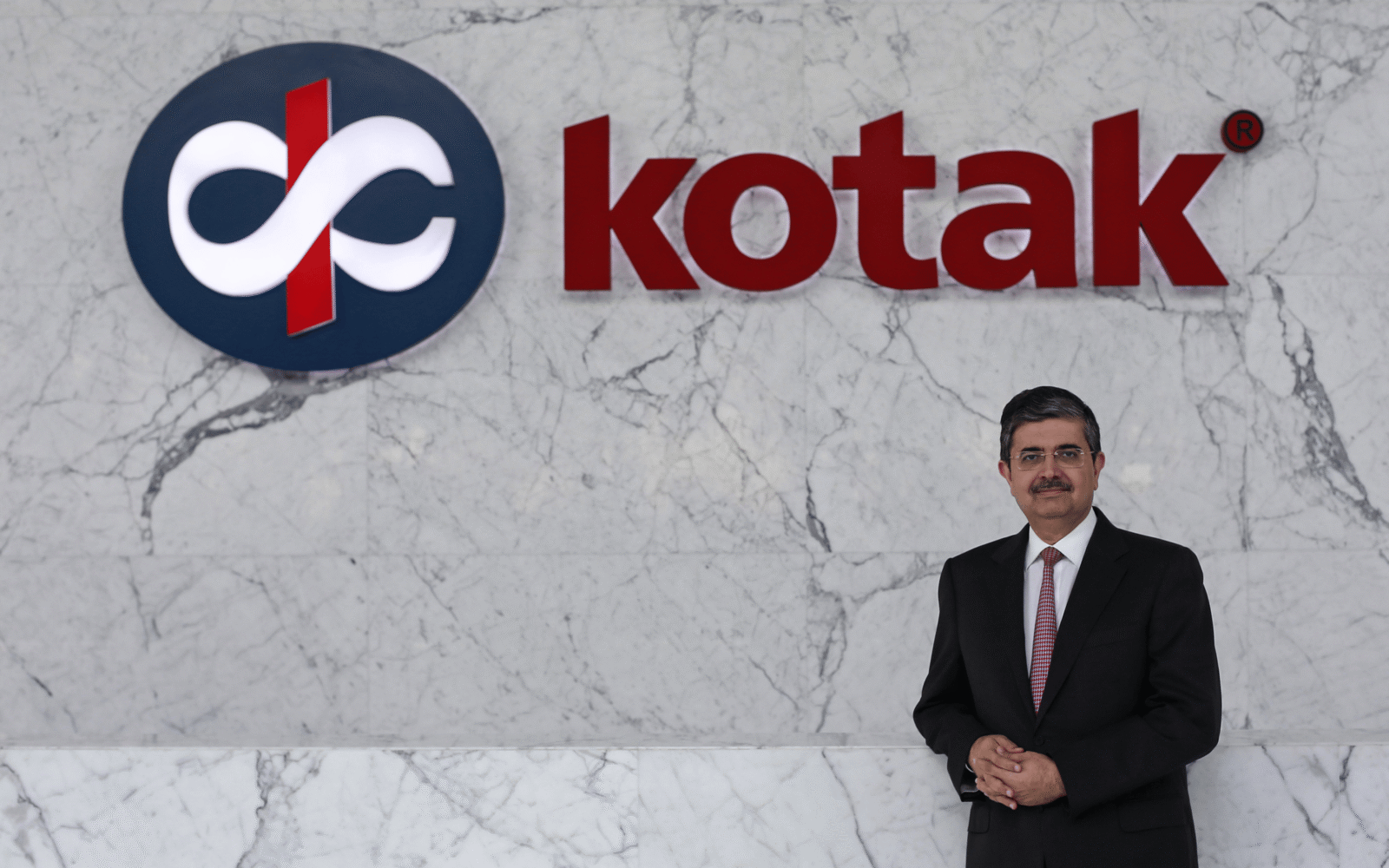
Seshadri Giridhar reviews How Uday Kotak Built a Valuable Indian Bank, a compelling account of the vision, leadership, and strategic choices that transformed a modest financial services firm into one of India’s most trusted private sector banks, with a current market cap of ₹78,856.78 crore.
How Uday Kotak Built a Valuable Indian Bank (Rupa Publications), co-authored by R. Gopalakrishnan and Tulsi Jayakumar, follows the journey of Uday Kotak, a young entrepreneur from a business family with a passion for finance. Part of a series ‘Shapers of Business Institutions’, the book describes how the economic policies of the License Raj stifled enterprise and created shortages and poor-quality goods. It was in this environment that the young entrepreneur, Uday Kotak, created and shaped a financial powerhouse, with Anand Mahindra as a sleeping partner. The enterprise grew into Kotak Mahindra Bank, which is among India’s top three private sector banks by market capitalisation.
Drawing on extensive research, including multiple interviews with Uday Kotak and members of his senior management team, the book uncovers the principles that made it one of the country’s most trusted banks within two decades.
It explains how Uday Kotak’s early leadership style was influenced by his grandfather, who was in the cotton trading business and had endured periods of depression and recession. Even during prosperous times, Uday Kotak was not driven to school in a car but travelled by public transport like many other children, an experience that helped instill humility and discipline.
Uday Kotak was passionate about cricket and was a talented player. However, a serious head injury during a game almost proved fatal, after which his family discouraged him from continuing with the game. As the authors observe, cricket’s loss is the banking sector’s gain.
The book attributes Uday Kotak’s success to his ability to identify opportunities before others. His first foray into business was bill discounting. Uday Kotak was also a stickler for rules. Unsure whether bill discounting by an NBFC was legally permissible, he sought the opinion of the eminent corporate lawyer Suresh Shroff and former Supreme Court judge P. N. Bhagwati before entering the business. It was during his bill discounting days that he met Anand Mahindra, and the two forged a lifelong association. They established Kotak Mahindra Finance Ltd., with the management resting entirely with Kotak. Mahindra was so confident in both the business and Uday Kotak that he gave his family name to the enterprise, immediately enhancing its credibility. His faith was amply vindicated — an investment of ₹1 lakh at that time would be valued at around ₹2,000 crore today.
Uday Kotak identified another opportunity before the market caught on: car financing, when Citibank was virtually the only player in the segment. The book also discusses ventures that did not succeed as planned—his unsuccessful bid to acquire full control of Bank of Madura, along with short-lived ventures with Goldman Sachs and Ford Credit. In 2003, Uday Kotak’s ambition was realised when the Reserve Bank of India permitted the conversion of his NBFC into a commercial bank.
From the outset, he sought to build a world-class institution with systems, procedures and controls that met international standards. He also positioned Kotak Mahindra Bank differently from established private sector banks such as HDFC Bank and ICICI Bank, making investment banking a key differentiator. The bank’s biggest leap came with the acquisition of ING Vysya Bank in 2015. Today, it has deposits of about ₹4.7 trillion and nearly 2,700 branches across the country.
What accounts for Kotak Mahindra Bank’s remarkable success in such a short period? The authors attribute it to his “think big” attitude, his empowerment of senior managers, his emphasis on communication and teamwork, and, above all, his integrity. The book is an engaging and informative account of one of India’s most admired banking institutions.
Since the book’s publication in 2021, there have been a couple of controversies surrounding the book. In 2024, the Reserve Bank of India barred Kotak Mahindra Bank from onboarding new customers through its online channels and from issuing fresh credit cards. These restrictions were subsequently lifted. The bank also came under scrutiny by the Enforcement Directorate following allegations of money laundering and missing fixed deposit records. None of them was proven to be acts of wrongdoing or materially diminished the bank’s reputation.
The authors are eminently qualified to explain the factors that contributed to Kotak’s outstanding success. With nearly five decades of senior leadership experience at Hindustan Unilever and the Tata Group, Gopalakrishnan has a wealth of practical insight, while Jayakumar, an academic with numerous publications in international journals, complements his perspective.

Seshadri Giridhar brings over 45 years of experience in senior commercial roles across the corporate sector, having served with leading organisations such as the DCM Shriram Group and Andhra Cements Ltd. A lifelong reader, he is particularly drawn to books on business management and business biographies.