Future Festivities – Reimagining the Bangalore Literature Festival
As the Bangalore Literature Festival prepares for its 15th edition, writer and translator Madhav Ajjampur draws inspiration from the Kerala Literature Festival, to make a case for the BLF with a bilingual approach—embracing both Kannada and English on equal terms.
To celebrate its 15th edition, the Bangalore Literature Festival (BLF) has scheduled a three-day programme from 11-13 December 2026. It will happen in Freedom Park (previously Bengaluru Central Jail), the premises the BLF moved into just last year, after several years spent in the AC halls and on the lawns of Hotel Lalit Ashok.
However, despite this transition, the BLF is yet to give Kannada, the language of the land, the prominence it deserves – in panel discussions, session announcements, the sales area, and other spaces.
Those who think of Bengaluru as a cosmopolitan city may be surprised by this perspective. Surely a literature festival should go beyond language rather than be bound by it; should be multilingual rather than monolingual; should be all-embracing rather than parochial? Yes, it should. Broadminded inclusiveness is always a desirable quality.
But why should English alone be the language of broadmindedness and inclusivity? At a time of increasing homogeneity, when Kannada- and other bhasha-medium schools are closing in large numbers and bhasha literacy is dropping, it becomes the responsibility of festivals like the BLF to use their cachet and influence to support the local, the native, the indigenous, the less-privileged.
The Kerala Model
Fortunately, the BLF has an established model it can follow – the Kerala Literature Festival (KLF). Though I have never attended it myself, I understand that Malayalam is the first language of the KLF. The invited languages are guests in Malayalam’s home, which extends to them a warm hospitality while remaining in charge of its house. Such an approach is an exemplar of the local negotiating with and absorbing the global on its own terms.
Given the Kannada language’s rich history of absorption and negotiation, an equivalent transformation of the BLF should not be too difficult. As K. V. Subbanna points out in ‘Kaviraajamaarga Mattu Kannada Jagattu (Kaviraajamaaraga and the Kannada Cosmos)’, Kaviraajamaarga – the first extant Kannada text, composed ca. 850 CE – acknowledges the presence of other languages around Kannada, even as it looks to build a ‘tattva (philosophy)’ for Kannada naadu, i.e., the Kannada land. This ability to welcome the other (anya) without diminishing the self (sva) is the basis for any kind of beneficial growth.
And there can be absolutely no doubt that Kannada has benefitted. From D. R. Bendre whose nominal mother tongue was Marathi, to Govinda Pai who was of Konkani descent, to Masti Venkatesha Iyengar who had Tamil ancestry, some of the most influential figures of Kannada’s 20th-century literary renaissance spoke a “home language” that wasn’t Kannada. This pattern, of being embraced by and embracing the Kannada people and their language, is also found within the larger public: the census of 2011 revealed that, Hindi aside, Kannada was the second language of more people than any other language.
Incidentally, the remodelled festival would not look very different. Giving Kannada equal status with English as a first language of the festival may be likened to a unidextrous person becoming ambidextrous. This linguistic ambidextrousness would drive the operations of the remodelled festival – from the volunteers gathered to run the sessions, to the emcees chosen to announce the sessions, to the panellists invited to speak at the sessions, to the moderators selected to helm the sessions, to the venues picked to host the sessions.
“Such an inclusionary reinvention would not just add colour to BLF; it would also increase its reach.
By giving Kannada and English the opportunity to talk directly to each other, on equal terms and on the same stage, it would put a stop to the hard separation between the English and Kannada languages (and their respective audiences) that has so far been a feature of the BLF.
It would allow for the conception of bilingual and trilingual sessions – Kannada-English, Gujarati-Kannada, Odia-Malayalam-Kannada, etc. – that mirror the bi-tri-multilingual manner that Indians talk to one another in.
By doing so, it would pose the audience the challenge of keeping up with different languages. (Don’t they say literature is meant to be challenging?) And all this would be done not by forsaking English, but by placing it in the position of spur, competitor, and friend; the very position English occupied in the late 19th and early 20th centuries.”
Imagining the Future
Let me conclude on an idealistic note. Five years from now, a talented young writer from Bhadravati, or maybe Gulbarga, is in the audience at the BLF. The panellists are Geeta Vasant and Sumana Roy. Ms. Vasant is speaking in Kannada, interspersed with English, about women’s poetry in Kannada; Ms. Roy is speaking in English, perhaps interspersed with Hindi, about Indian women’s poetry in English. The moderator is a woman who knows all three languages – Kannada, English, Hindi – well enough.
The young writer in the audience has, like Ms. Vasant, a superb grasp of Kannada as a literary language, but finds English literature so many (unchewable) “grains of iron” – to use an idiomatic Kannada expression. As the session ends, she stands to applaud the speakers. Her face is shining. She is thinking that her language has shown itself to be just as supple and valuable as English, not only in the field of poetry but also in its ability to offer opportunities and platforms, at least within Karnataka. The session has given her a new lease of self-confidence and a renewed pride in her language and literary heritage.
Such self-confidence and pride are as important to a writer as the gift of imagination. And who knows what possessing them might inspire? Is it not worth making an effort to find out? I believe it is.
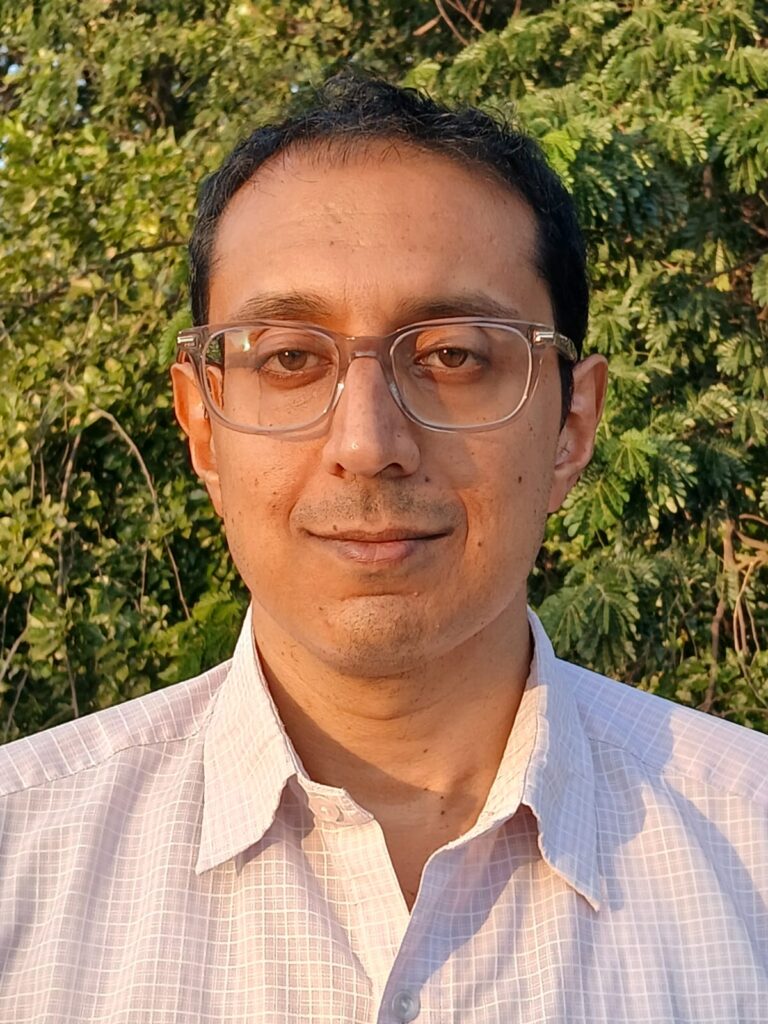
Madhav Ajjampur is a Bengaluru-based writer, translator, and author of The Pollen Waits On Tiptoe, his English translations of selected Kannada poems by Da Ra Bendre.
#Bengaluru Literature Festival#English#Future Festivities#kannada#Lifestyle#the good city#Urban Spaces