The Chennai–Delhi Train That Became Part of Family Histories
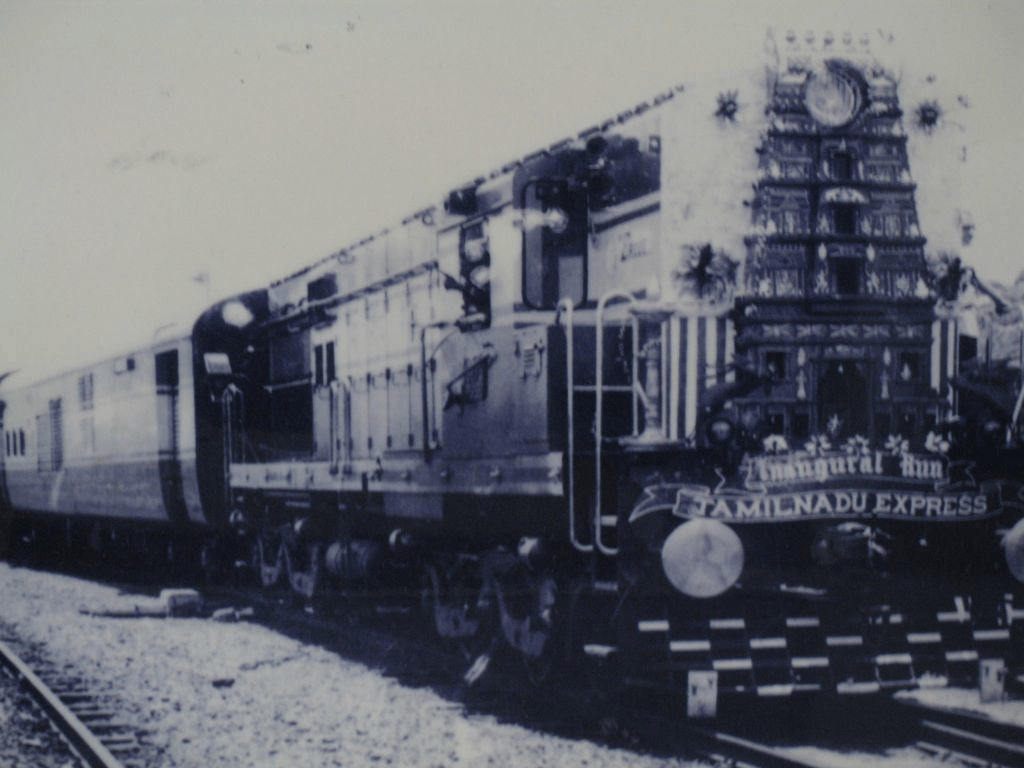
The Tamil Nadu Express has been more than just a train connecting Chennai and Delhi; it has been a carrier of memories, milestones and millions of journeys. As the iconic service marks its Golden Jubilee on August 7, fans are taking a ride on the historic occasion. Janani Sampath explores how the train became one of Indian Railways’ most beloved and enduring legends.
One of the busiest railway stations in the country, Chennai Central is familiar with the rituals of departure. Relatives gather on the platform to see off their loved ones, carrying bags, food packets and last-minute instructions. There are hugs, hurried conversations and people standing at the windows for one last goodbye before the train pulls out.
However, on August 7 at around 10 pm, the archetypal bustle will also have an air of celebration, with a group of Indian Railway fans waiting to board the Tamil Nadu Express. Fifty years ago, when the train made its first journey towards the Capital, the scene would not have been very different; only that the station was called Madras Central. Families would have gathered to see off their own, passengers would have settled into their berths, porters would have hurried along the platform, and the familiar sound of a train preparing to leave would have filled the station. Except that this time, the passengers boarding are there to celebrate the train itself.
One among them is software professional and railway enthusiast Ashwin Gandhi, for whom the Tamil Nadu Express has been a lifelong companion. As a child, he watched countless videos of the train on YouTube before eventually starting his own railway channel. Ashwin is taking a trip to Bhopal on one of his favourite trains to mark its 50th anniversary. He says, “I have travelled on the service so many times that I have lost count. What keeps drawing me back is its consistency. Unlike the Chennai Rajdhani, which runs only twice a week and departs early in the morning, the Tamil Nadu Express leaves Chennai every day at around 10 p.m., allowing passengers to board after a full day’s travel and wake up the next morning well on their way to the Capital. Even today, it remains faster than the Grand Trunk Express.”
Gandhi believes the train’s enduring appeal lies in its discipline. While many long-distance trains have gradually added more stops, the Tamil Nadu Express has largely retained its character as a limited-stop, high-priority service. More importantly, it has preserved its identity. It still begins at Chennai Central and ends at New Delhi, remaining a “cult train” celebrated for its punctuality, prestige and impeccable maintenance. It also holds a unique distinction as India’s first train to be named after a state.
That reputation did not emerge by accident. Senior railway official Ananth R explains that the Tamil Nadu Express was born out of necessity. “By the early 1970s, the Howrah and Bombay Rajdhanis had already connected those cities with Delhi through premium, high-speed services. South India, however, still depended largely on the venerable Grand Trunk Express, introduced in 1929, which was considerably slower. The Tamil Nadu Express was conceived to bridge that gap, with very few stoppages and an ambitious 30-hour schedule between Madras and Delhi,” he says.
When Ananth joined the Railways in the 1990s, the Tamil Nadu Express had already become something of an institution. Passengers spoke of its excellent maintenance, clean coaches, dependable food and punctuality. It was not merely Chennai-bound travellers who depended on it. “People travelling between intermediate stations such as Vijayawada, Nagpur and Delhi found its timings exceptionally convenient. Before the Chennai Rajdhani entered the picture, it was unquestionably the fastest rail link between the two cities, and even today it remains the fastest daily service on the route,” he says.
Ananth observes that many passengers associated the remarkable cleanliness with the Tamil Nadu Express even in the days of ICF coaches. For him, as for countless others, the train represented a standard that other services aspired to.
Much of my childhood is stitched together by train journeys. From what was then Madras, the railway tracks stretched across the country’s vast hinterland, carrying us to Bangalore, Bombay and Delhi. Long before airfares became affordable, most Indians learnt to understand India through a railway window. Every journey unfolded like a moving panorama: red earth giving way to black cotton soil, palm trees yielding to rocky plateaus, fields dissolving into bustling towns, and emerging from nights into the softly lit dawn in another quaint town. Yet, however different the landscape became, the train itself remained reassuringly familiar.
It is difficult to think of it merely as another service on the Indian Railways timetable. For generations of travellers, it has been a moving landmark, connecting not just Chennai and Delhi but memories across decades. I still remember quarrelling with my brothers over the coveted top berth, inventing games to make the long journey disappear, and travelling to Delhi for family weddings that felt like grand adventures. My fondest memory remains a scorching May afternoon at Balharshah station, where my brother, having somehow learnt my Class XII board examination results, shouted them across the compartment with such excitement that strangers celebrated with us. On a lighter note, my father turned every journey into a lesson, making us memorise every halt along the route. Decades later, I can still recite them.
Listening to railway enthusiasts and officials speak about the Tamil Nadu Express, I realised these memories were far from unique.Today, India’s railway landscape is changing rapidly. Sleeper Vande Bharat trains are on the horizon, stations are being modernised and travel times continue to shrink. Ananth says, “These changes will inevitably reshape long-distance rail travel, even as he wishes the Tamil Nadu Express had retained fewer stoppages to preserve its original speed and exclusivity.”
But perhaps speed alone was never the secret behind its enduring popularity. For some, the Tamil Nadu Express was the quickest route to Delhi. For others, it was the cleanest train, the most punctual service or simply the most dependable way to travel. For children growing up in the 1980s, 1990s and early 2000s, however, it was something more. It was where siblings argued over berths, parents unpacked home-cooked meals, strangers became companions, and life’s milestones unfolded between stations.
Some trains transport passengers and a rare few transport generations of memories. The Tamil Nadu Express has spent fifty years doing both.