An Entertaining Journey Through Memory, Relationships and Changing India

Some stories are engaging even if they chart a predictable arc, finds Gouri Agtey Athale after reading Tino De Sa’s The Disrobing of Draupadi and Other Stories.
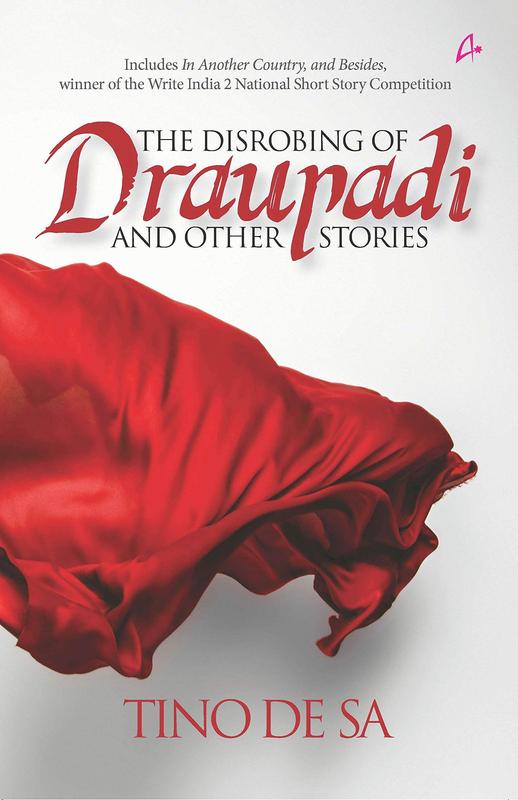
The title catches the eye first. The Disrobing of Draupadi and Other Stories reels in the reader. Or at least it did this reader. I wondered what the author’s take would be on that episode from the Mahabharata, since almost everyone has a view and a version to narrate.
Surprise, surprise! This is a story set in a Parsi colony in present-day Mumbai, so it could not be further removed from the Mahabharata. It is not the first story in the collection, but it is clearly the eye-catching, reader-hooking one. And, importantly, it is not quite as predictable as some of the others.
The first story, In Another Country and Besides, won the first prize in Season 2 of the Times of India’s Write India contest. The author, Tino De Sa, is a former bureaucrat who retired as Chief Secretary of Madhya Pradesh. Not surprisingly, several of the stories draw on remote locations and the workings of government in that state. His professional experience lends authenticity to these settings, particularly when he writes about the often-opaque relationship between ordinary citizens and the machinery of the state.
As the author notes in the preface, all but one of the 11 stories in the collection were submitted for the contest. The exception is Field Vision. Another story, To the Manner Born, about the Begum of Bhopal, is based on a version of history and is therefore set outside the 20th and 21st centuries.
Several of the stories are predictable, but that does not necessarily make them less enjoyable. The pages turn themselves. You may have a fairly good idea of where a story is headed, yet you continue reading to see whether the writer will confirm your assumptions. In some ways, the pleasure lies not in the surprise ending but in the journey towards an ending that feels inevitable.
Take Koshta, a character in one of the stories. If you have not actually met him, you have certainly heard of him or read about his kind: the man who can somehow get the government machinery moving even though he himself is located in a remote tribal area. You can probably guess what is going to happen. But no, I am not going to reveal it.
One of De Sa’s strengths is his ability to create recognisable worlds with relatively few strokes. The atmosphere feels authentic, whether it is a suburban Parsi household in Mumbai, government offices in remote Madhya Pradesh or the intimate world of a modern couple. You can imagine yourself there. The Two Season Man, in particular, draws on the author’s memories of an earlier India and evokes the colonial hangover of those years: the household arrangements, social hierarchies and attitudes of a generation shaped by the departing British. For this reviewer, it became an unexpected journey back in time.
Arpita’s Last Secret was quite my favourite. There is predictability here too, but this is a case where the predictable outcome is precisely the one you want. It is satisfying to read on and discover that your instincts were right. The story also carries the understated message that what goes around comes around, not necessarily in some distant hereafter but within this lifetime.
The story that did not quite grab this reviewer’s attention was The Simply Iyers. Compared with the others, it feels superficial and lacks the depth of characterisation found elsewhere in the collection. The people in the stronger stories feel as though they have lives beyond the pages; here, the characters remain more functional to the story.
Overall, The Disrobing of Draupadi and Other Stories is an accessible and entertaining collection. De Sa writes about very different worlds, but there is a common interest in people caught between institutions, relationships, memory and changing social realities. The stories may not always surprise, but they are crisp, readable and sufficiently varied to keep the reader turning the pages. Definitely worth a read, particularly for those who enjoy short stories grounded in recognisable people and places, with a distinctly Indian sense of time, place and social observation.
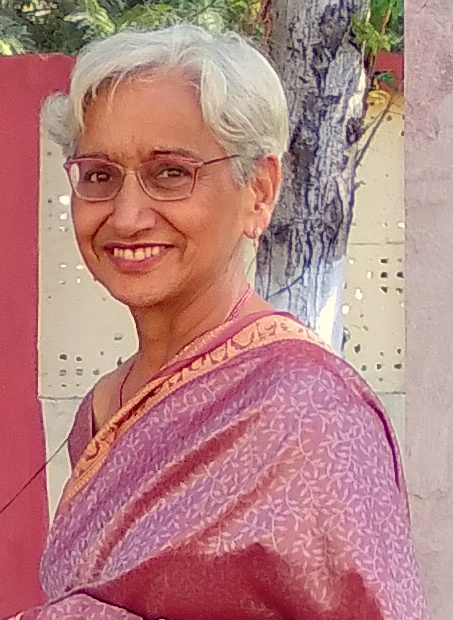
Gouri Agtey Athale is a former Assistant Editor with The Economic Times in Pune. She has over 30 years of experience as a journalist and has been published in national and international publications.