Mothers, Prophecies & Anxious Parenting
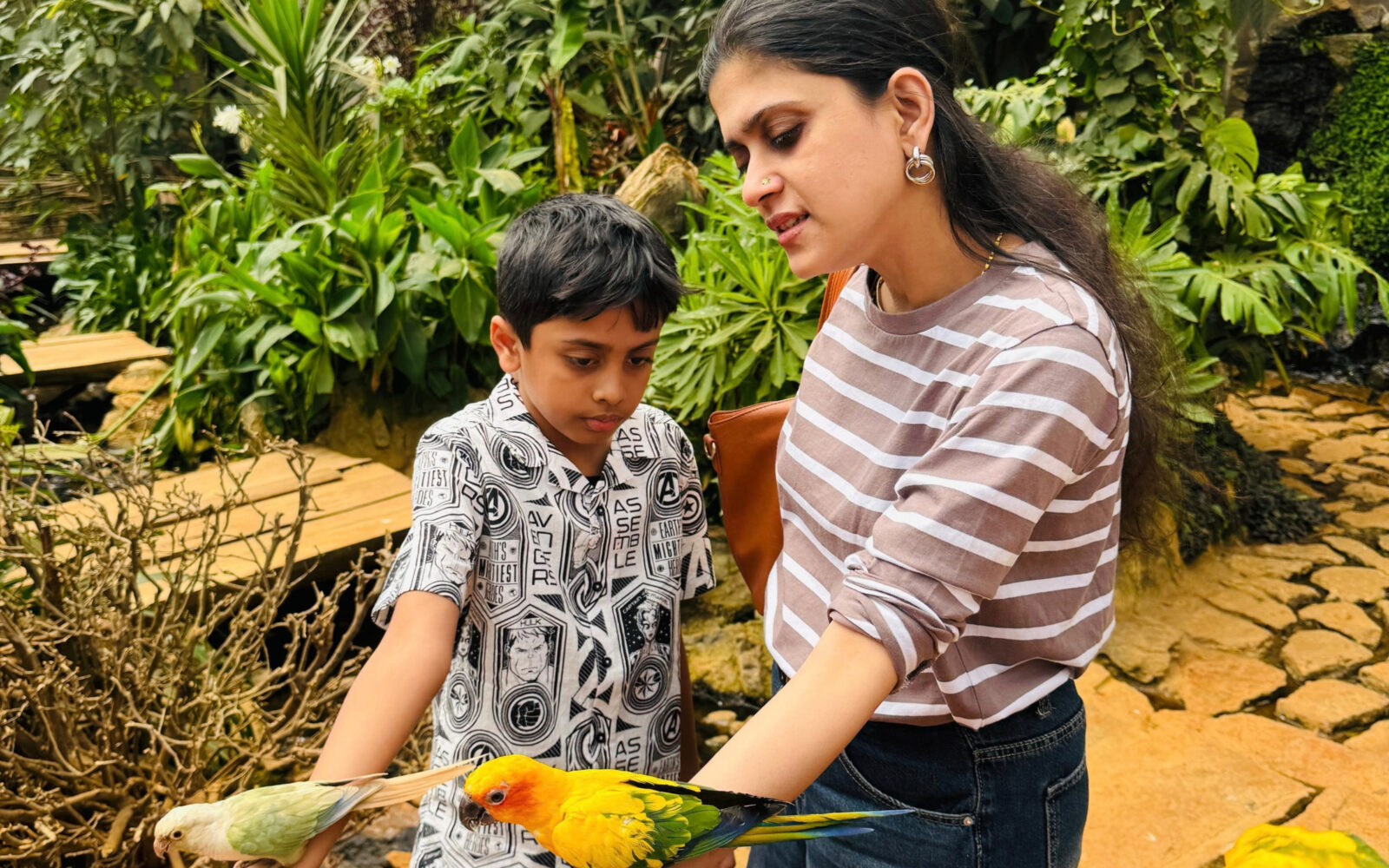
Sometimes, raising children is also about learning when to step back and let them grow, writes Janani Sampath, who’s graduating from anxious parenting to a hands-free approach.
As a kid, whenever I brushed aside my mother’s warnings, she chided me for not listening to her. She would always say the same line: “You will know my plight only when you become a mother.”
Looking back, my mother was not predicting my future so much as issuing a warning, complete with a lifetime guarantee. But I was certain that when I became a parent, I would be calm, sensible, and entirely free from the anxieties that seemed to consume my mother. My children would enjoy a generous amount of freedom. They would never be subjected to endless reminders about food, safety, health, studies, or the hundred other things that occupied her mind. Why not? There was no GST back then on unfounded aspirations!
Years later, as the mother of a spirited nine-year-old boy, I have come to appreciate both the accuracy and the inevitability of that prediction.
I grew up with two elder brothers, and our mother had the formidable task of managing three children with very little age difference between them. Looking back, her parenting resembled the administration of a bustling institution.Rules applied to everyone, arguments t had to be settled with diplomatic skill, and there was a constant stream of competing demands that ensured no single child occupied the centre of attention for very long.
My son, on the other hand, is a single child. There are no siblings to dilute my concerns or distract me from them. Every hope, fear, ambition, and anxiety has only one destination.
Somewhere along the way, I seem to have appointed myself the full-time curator of his future. Caught between the allure of gentle parenting and helicopter parenting, and at times alternating among a dozen parenting styles yet to be named, I have arrived at my own style, called ‘anxious parenting’.
His schoolwork, his extracurricular activities, his reading habits, his friendships, his screen time, his diet, and his ability to develop into a reasonably competent adult all appear, at least in my mind, to require continuous supervision. A simple after-school activity can trigger an elaborate chain of thought. If he enjoys drawing, should he attend art classes? If he likes football, should he be training more seriously? But he is undertaking tennis lessons now. Am I imposing it on him? If he shows an interest in music, am I nurturing it sufficiently? At times, I find myself evaluating childhood the way a corporate manager might evaluate a five-year strategic plan. My OKRs and KRAs only seem to grow with every passing day. Somewhere, a management consultant is probably reading this and wondering why I haven’t introduced a performance appraisal system yet.
This is where the line between being involved and being over-involved becomes difficult to see. Nilam Calla, an educationist who runs Sumini Montessori in Bengaluru, puts it plainly: “It’s a thin line between healthy parental involvement, which provides active support, strong boundaries and micromanaging by not allowing autonomy and allowing the child to grade responsibility for their actions.”
Her observation hits uncomfortably close to home. I tell myself that reminders are a form of care, that supervision is responsible parenting, and that anticipating problems is simply part of being a mother. Yet somewhere between reminding a child and managing every small decision lies the possibility of taking away the very thing we are trying to teach him: responsibility.
“Children need to be allowed the freedom to think and choose independently without being given too many instructions,” Nilam says.
It is advice that sounds perfectly reasonable when one hears it as a parent, but is considerably harder to practise. Children need to be allowed to make mistakes– this sounds wonderfully simple until your child is actually in the process of making one. We see a mistake approaching and want to prevent it before it happens. We see a missed opportunity and want to make sure the child does not regret it later.
The pressure we place on children can also come disguised as ambition. Nilam points out that “It puts a lot of pressure on the children to perform & could make them feel inadequate.”
That sentence makes me think of the way childhood has gradually become a project.At this rate, the only thing missing is a PowerPoint presentation titled “My Child: Vision 2035”.
Perhaps we have become so invested in giving children every possible advantage that we have forgotten that childhood is not supposed to be a résumé.
Nilam’s observations also extend beyond the formal classroom. “Reading aloud from quality literature, providing information about the world around them, meaningful discussions, visiting museums, art galleries, monuments.”
There is something liberating about this idea of learning. It does not require another class, another certificate, another competition or another carefully structured activity. It can happen while reading together, while walking through a museum, while looking at a painting, or during a conversation about something the child has noticed. Learning can be part of life rather than another item on a parent’s checklist.
This matters because, as Nilam observes, “Parents often expect all learning to happen only in school. The relationship between school & parents is more transactional now.”
The word “transactional” stays with me. Perhaps it explains some of the anxiety that surrounds contemporary parenting. We send children to school expecting outcomes, monitor marks and activities, communicate with teachers, track progress and then try to fill whatever gaps we believe remain. Parenting can begin to resemble project management, with the child at the centre of a system of expectations.
I know how easily I slip into this mindset. Other mothers recognise this constant state of involvement. Shaila B, a 30-year-old mother of two in , says that in her small family, everything revolves around her five-year-old daughter. Even when she is working, she finds it difficult to stop being a mother. The work-from-home arrangement helps, but she still feels like a full-time parent, even as her husband chips in to take care of their daughter. Her daughter, she says, has taught her more about patience.
It is perhaps one of the great ironies of parenting that we imagine we are raising children, only to discover that they are quietly raising us too.
Kalpana V., a Bengaluru-based CA and mother of two boys, aged 16 and 8, found motherhood very different the second time around. With her first son, almost everything was an experiment. The second time around, things have been more organised, and the stress has been less. Things seem to have fallen into place, probably because of the experience with the first one and the long age gap between the two boys.
There is comfort in these experiences because they suggest that parenting does not have to be a perfect system. Sometimes experience teaches us to loosen our grip. Sometimes another child teaches us that there is more than one way to do things. Sometimes, perhaps, the child teaches us.
Nilam’s final piece of advice is the one that stays with me longest: “There’s no time to be a child. Allow them time & space to grow.”
It sounds simple, but perhaps it is the hardest thing to do. We live in a time when children have more opportunities than ever, but those opportunities can quickly become obligations. We want them to read, play, learn music, learn another language, play a sport, perform well at school, develop social skills and be ready for a competitive world. In our eagerness to prepare them for adulthood, we can forget to leave enough room for childhood.
The most unsettling part is that I am increasingly recognising my mother in myself. I hear her voice every time I remind my son to carry a water bottle, finish his homework, eat properly, or think before attempting something adventurous. The warnings may have changed with the times, but the instinct behind them remains remarkably familiar.
Becoming a mother did not merely help me understand my mother’s plight. It revealed that motherhood comes with an extraordinary ability to worry about things that have not happened, may never happen, and quite possibly exist only in the imagination.
The real surprise is that this ability appears to be passed down from one generation of mothers to the next with far greater efficiency than looks, traits or family recipes.
Perhaps the trick is not to stop worrying altogether. After all, worrying is one parenting skill I seem to have mastered without a single workshop, certificate or recommendation letter.
My mother told me I would understand her plight when I became a mother. She was right. I’m also learning that sometimes the best thing a mother can do is stand back, take a breath, and allow her child to grow. It’s a work-in-progress; so apparently is motherhood!