Book Review: Why the World Needs Angry Women
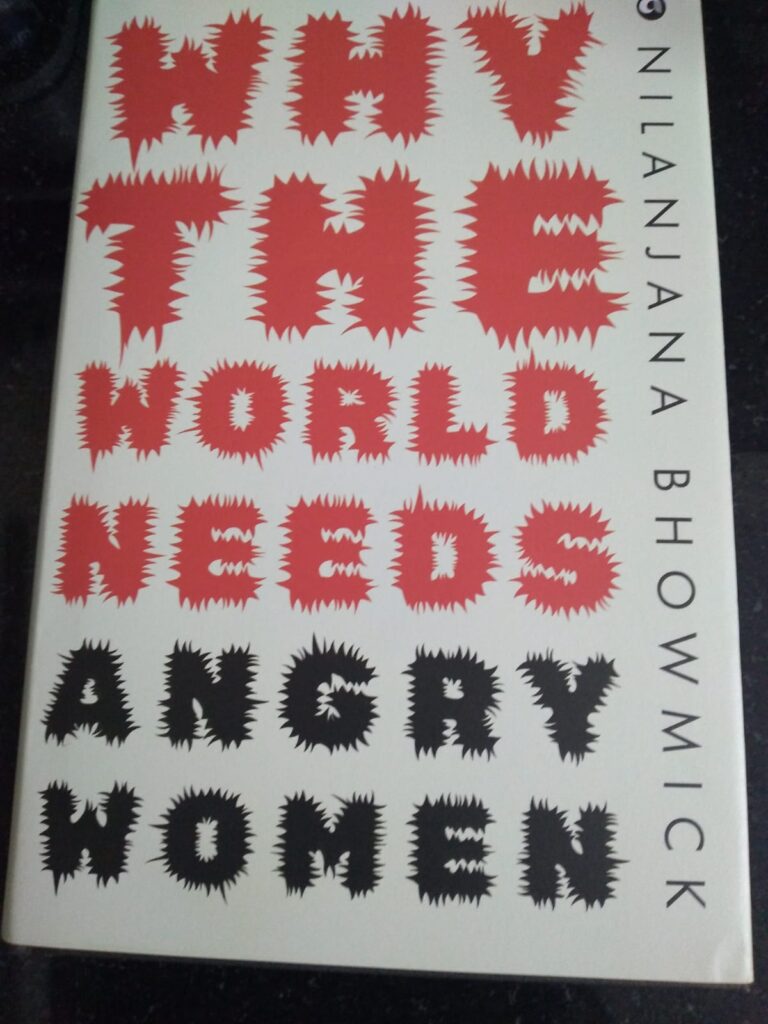
The title is provocative: it draws attention, reels you in, and then… it loses its grip—until you reach Part IV, the explanation of the title, writes Gouri Agtey Athale as she reviews Nilanjana Bhowmick’s latest book, Why the World Needs Angry Women.
The title of Nilanjana Bhowmick’s latest, Why the World Needs Angry Women, is enough to get someone like me hooked. Not that I am an angry person; no, it’s my beliefs that got me hooked on that title. As an unapologetic feminist, I wonder if I need to be constantly angry to achieve what I want: the freedom to think, assess, and then say “yes”—but more often say “no”.
Bhowmick has narrated the stories of a varied set of women, all of whom have faced struggles, very hard struggles, to achieve what they have. But the constant anger that the author seems to demand or demands on behalf of the women featured in the book, cannot by itself sustain any progress. Or freedom or the feminist movement.
The feminist movement is not new to our country (or any other country, for that matter). It is just that a lot of it is not recorded or is recorded in a language other than English. So it seems that there is no history.
In a subcontinent-sized country like India, with its history of regional identities, there are lived stories: historically recorded stories of women from over four to five hundred years ago, which have now become part of the region’s culture. That strong culture of seeing and hearing women has left its mark on such societies. These societies thus have a strong women’s force, where women’s voices are at least heard, if not followed. I am deliberately leaving out our epics, the Ramayana and the Mahabharata, with their varied women.
In the last chapter, Part IV of the book, Ms Bhowmick explains, “The women in it (ie., the book) are not angry in identical ways.” This is true, since no two people react to a given situation in the same way. One agrees with a lot of what the author has spelled out, but there is a lot that does not fit under the title of the book.
For example, the very first narratives are of women who are not fighting the feminist cause. The disappearance of a son and a mother’s relentless, ongoing fight to find answers is the very first story. Feminist? I don’t think so. The second story is about Dalits. Though the woman calls herself a Dalit, she is a Christian (her grandfather converted); hence, she is not legally a Dalit. Dalits have it tough on enough fronts, and feminism may not be at the top of their agenda.
Story after story narrates the tough choices and fights that ordinary women have had to face and how they have somewhat overcome them. But this is where a fundamental question arises in my mind. Are the successes of these women replicable? Will they be able to bring about that huge mindset change needed to effect social change? Because unless society changes, social norms adapt, and accept women in the public space, where is the real change? Sustainability of a process is essential for lasting change.
In the early 1900s, women suffragettes chained themselves to fences in London in their fight for the right to vote. I am not saying we take our cues from the West. There have been fights in India, often led by men, whose beneficiaries were solely women. Take DK Karve, the Bharat Ratna awardee, and his fight to educate women, especially those who had been discarded by their families.
That changed society. Was Maharishi Karve driven by anger? Perhaps. But there was a lot of hard work put in, without anger but with a determination to change the situation. And look at what that did to society and not just the women who got an education! That kind of determination does not come through in the stories narrated in this book. Their stories sound individual although they must have had their effect on the society around them.
There is another aspect of the stories and narration that is troubling. The stories are about women from the northern plains of India; the southern peninsula is again invisible. Much change has happened in peninsular India, but that just does not get heard or seen. Pity. A more equal society is the ultimate aim—something that Mao Zedong enunciated when he said women hold up half the sky. Or earlier, when MK Gandhi said that educating a woman meant educating not just an individual, but a family or a community. More than education, we need to emphasise the right to make decisions, the ability to say either “yes” or the harder option: “no”.
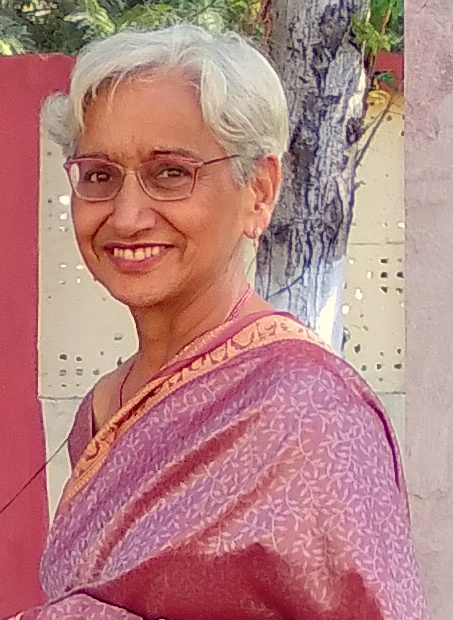
Gouri Agtey Athale is a former Assistant Editor with The Economic Times in Pune. She has over 30 years of experience as a journalist and has been published in national and international publications.