Carrying Your Medical History In Your Pocket
A routine eye check-up becomes an unexpected window into the quiet digital transformation of healthcare in Bengaluru. From paperless records and AI-assisted diagnostics to startup-driven innovation and the growing question of who truly owns our medical data, Aditya Mendonca reflects on how technology is reshaping the patient experience—while asking whether the future of healthcare should live not in hospital files, but in our own pockets.
It started, as these things often do, with too much screen time. Phone in the morning, laptop through the day, another screen at night to unwind — and somewhere in that loop, my eyes began to hurt. A dull ache behind the sockets, then a headache that persisted. I called up an eye doctor friend and booked an appointment to get to the root of it.
What followed turned into something far more interesting than a routine eye check-up — it became an educative demonstration of how far healthcare technology in Bengaluru has come.
No files, no folders, no fuss
I , like many of our recreation, can’t be bothered with a carefully catalogued medical file. I walked into the hospital which asked me for only thing : my phone number. Within seconds, their system pulled up a summary of my last visit — over four years ago — including what had been discussed then. A clean digital thread connecting a version of me from four years back to the present.
Anyone who has dealt with the Indian healthcare system pre-digitisation knows the ritual of the physical file — thick, dog-eared, often incomplete, always at risk of being left behind at home on the one day you need it. Watching that friction simply disappear was, honestly, a bit of a moment.
The tech that speeds up the diagnosis, not just the paperwork
Next came a quick X-ray of my eyes, which gave the doctor a clearer, faster read on what was going on before we even sat down for the second consult. When we did, she pulled up the imaging on her screen and walked me through it — no errors detected, nothing structurally wrong, likely strain-related. Seeing the visuals in real time, rather than hearing a verbal summary, made the diagnosis feel more like a collaboration than a verdict handed down.
She then recommended a follow-up at another branch with a specialist. Here’s the part that felt like value for money: because it was within five days, the second consultation was already covered under what I’d paid the first time. No re-billing, no separate transaction, no sense of being passed along as a fresh case. Just continuity — the system treating me as one patient across two visits, not two unconnected appointments.
That hospital was Narayana Nethralaya, founded by the late Dr Bhujang Shetty, who built what began as a small clinic into one of the country’s leading super-specialty eye care institutions, now with multiple centres across Bengaluru. It’s a very “Good City” kind of story — one person’s clinical obsession scaling, over four decades, into a network that quietly changes how an entire city experiences eye care.
And then there was the commute
For my follow-up, I hopped onto the Namma Metro from MG Road to Whitefield and was there in under thirty minutes. In a city infamous for traffic that can turn a 15-kilometre drive into a ninety-minute ordeal, that felt almost as remarkable as the hospital’s tech stack. Bengaluru’s healthcare infrastructure isn’t just what happens inside the hospital walls — it’s also whether you can actually get there without losing half your day to Outer Ring Road.
The wait, and the harder question underneath it
If I’m being honest, what frustrated me through all this was the wait. Long stretches in the reception area, between the first consult and the X-ray, between the X-ray and the second consult. I sympathise with the doctors and nurses — the sheer volume of people seeking care in a city like Bengaluru has grown faster than the system’s capacity to see them quickly, and that isn’t a staffing problem you fix overnight.
But the wait isn’t really what stays with me. It’s a harder, more uncomfortable question underneath it — one I don’t have a clean answer to.
I’m not a doctor. I’m a patient — across multiple categories, for many years now. And from that seat, it’s hard not to notice the fine line between genuine clinical need and the economics of a hospital system that’s becoming more privatised by the year. How does someone go from wearing glasses at a young age, to being told, years later, that surgery is now the recommended path? Is that always the honest clinical progression — or does it sometimes brush up against the fact that procedures carry a better return than a prescription refill? I don’t have the training to answer that with certainty, and I’d never accuse an individual doctor of acting in bad faith. But as a patient, that ambiguity is real, and it leaves a mark. It’s a fine line of judgement — knowing when to trust the recommendation and when to seek a second opinion — and I suspect a lot of us carry some scar tissue from having had to navigate it, often at a moment when we’re least equipped to push back.
I don’t think the answer is cynicism. I think it’s transparency, and options. And this is where I’d point to what’s coming out of the startup ecosystem — much of it, fittingly, out of Bengaluru.
Can your phone camera actually catch something?
Increasingly, yes — for a narrowing set of conditions, and always as a first flag rather than a final word. Bengaluru-based Remidio builds a smartphone-attachable retinal camera paired with offline AI that screens for diabetic retinopathy in seconds, now deployed across primary care and community screening camps in places with no ophthalmologist nearby. Forus Health, also home-grown here, recently received Indian regulatory clearance for an AI retinal screening tool aimed at exactly this kind of early, decentralised detection. Mumbai’s Qure.ai reads chest X-rays for tuberculosis and lung abnormalities in minutes rather than the days a formal radiology report might take. SigTuple automates the reading of blood and tissue samples to flag anaemia and other blood disorders faster.
The pattern across all of them is the same: use a camera, a sensor, or a basic peripheral to catch an early signal cheaply and quickly, then route the person toward a qualified specialist for anything that needs real judgement. None of these tools are built to replace a doctor — the good ones are explicit about that. What they’re built to do is shrink the distance between “something might be wrong” and “a doctor has actually looked at this,” particularly for people who’d otherwise wait months, or never go at all.
That, to me, feels like the more honest use of technology in healthcare — not something that nudges you toward a procedure, but something that gets you to a professional opinion faster and with less friction. If the ROI-driven side of private healthcare is a real pressure, then early, low-cost, startup-built screening might be one of the more meaningful counterweights we have — provided it stays firmly in the business of flagging, and leaves the deciding to the people trained to decide.
A pattern bigger than one visit
This wasn’t a one-off. Hospital chains across India — and Bengaluru in particular, given its density of tech talent — are steadily building out patient-first digital infrastructure: unified electronic health records that follow you across branches and years, imaging systems integrated directly into consultation rooms, and billing structures designed around a course of treatment rather than a single transaction.
As healthcare goes digital, patients are gaining easier access to information, care and continuity.
The next frontier, as a recent Fast Company piece on remote patient monitoring lays out, is extending this thinking beyond hospital walls entirely — using connected devices to track chronic conditions in real time, so care becomes continuous rather than something that only happens when you book an appointment. As someone managing diabetes while training for triathlons, that shift feels personal. The idea that my glucose trends, heart rate variability and eye health could all live in one accessible thread, visible to whichever specialist I’m sitting in front of, isn’t far-fetched anymore. It’s already partially here.
What struck me most, though, wasn’t any single piece of technology. It was the absence of friction — no folders, no repeated history-taking, no disjointed billing, no wasted commute. Healthcare that respects your time and your data as much as your health.
A thank you, on Doctors’ Day
We recently marked National Doctors’ Day, and it feels right to close on that note rather than a purely technical one. Behind every system I’ve described — the instant patient history, the imaging shared on screen, the five-day window of continuity — there’s a doctor and a clinical team who chose to trust the technology and build their practice around it, on top of everything else they already do. So a genuine thank you to the team at Narayana Nethralaya, Bengaluru, for embracing technology across all their centres and making it feel effortless from the patient’s side of the desk. That’s not a small thing to get right, at scale, across a whole city.
So here’s the question I keep coming back to: as more of our medical history moves from paper into these city-specific hospital systems, what’s the best way to carry your entire medical history with you — one that travels with you across hospitals, cities, even countries, and puts you, not the institution, in control of it?
Would love to hear how your own hospital or clinic in India is using tech to make your visits smoother — drop a comment or share this with someone who’d relate.
Source referenced: Fast Company — How remote patient monitoring advances affordable healthcare
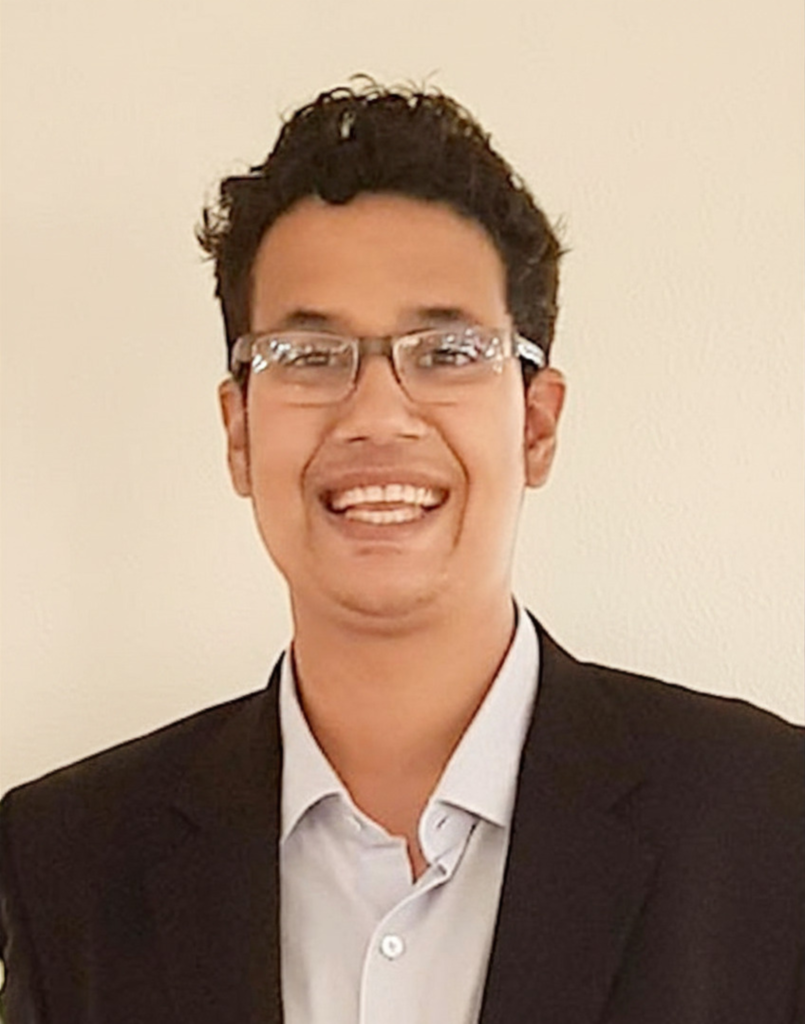
Aditya Mendonca is Executive Editor of The Good City.