‘More women attempt suicide, but more men die by suicide’
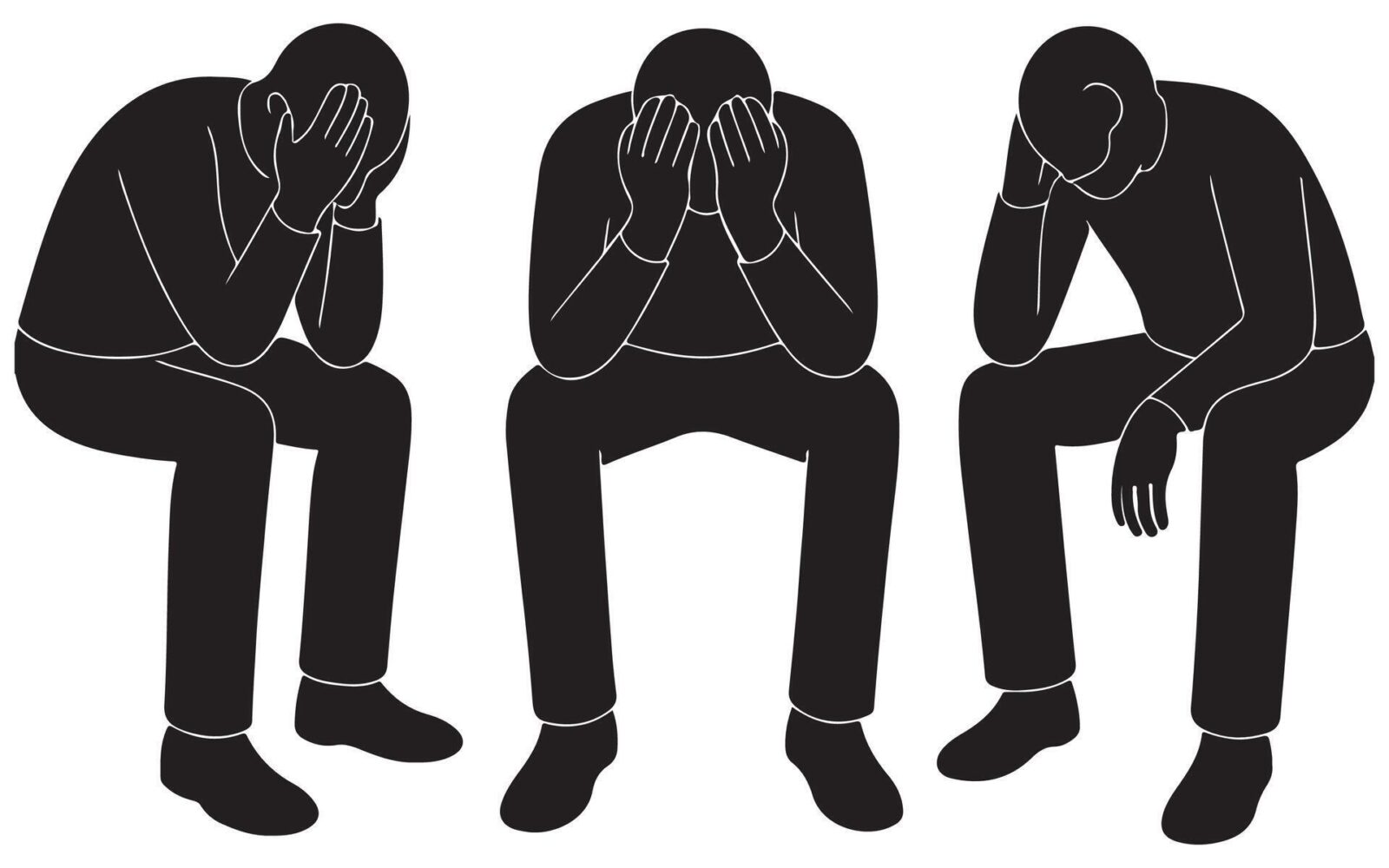
October 10 is observed as World Mental Health Day. Dr Lakshmi Vijayakumar, who founded the suicide prevention helpline SNEHA 40 years ago, says suicide is a social problem, not just a mental health issue. In conversation with Janani Sampath, Dr Vijayakumar discusses the growing impact of social media, and why human connection continues to matter in an increasingly digital world.
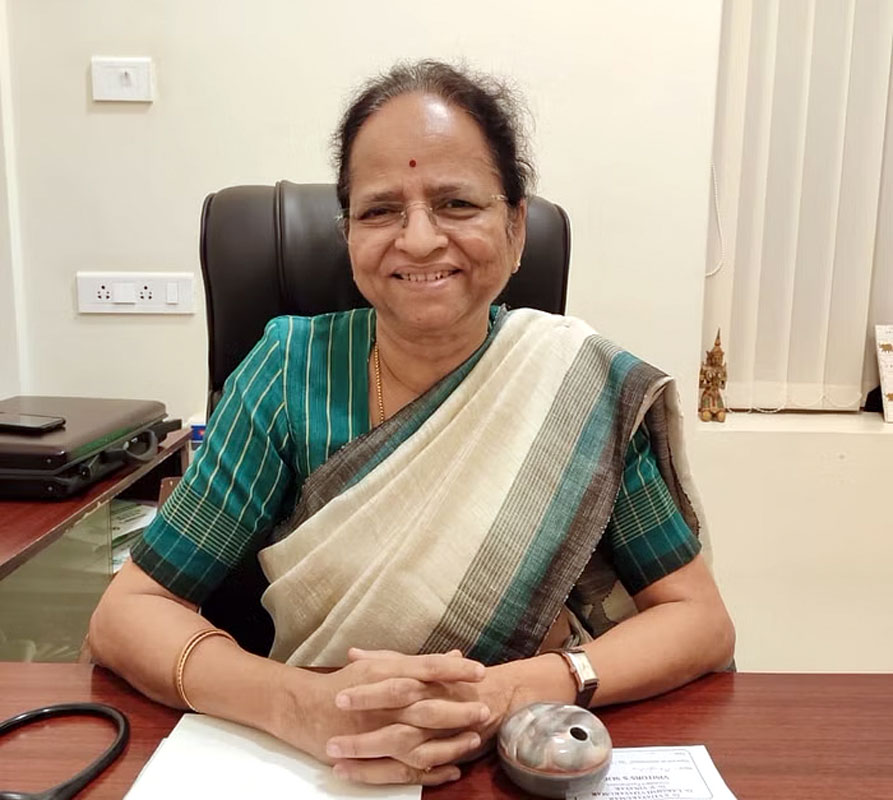
Dr Lakshmi Vijayakumar, psychiatrist and founder of SNEHA has spent four decades working on suicide prevention. What began as a small, volunteer-driven initiative to prevent suicides has since evolved into a model for suicide prevention, community intervention and policy change.
What made you realise that suicide prevention needed a different approach in India?
When I was practising as a psychiatrist, standard medical textbooks described a person who died by suicide as an elderly white male living alone. What I was observing, however, was very different. I was seeing young women often dealing with family issues, and many of them did not have a mental health disorder as such.
At the International Association for Suicide Prevention Conference in Vienna in 1985. I was amazed by the volume of work being done around suicide prevention—something nobody was really discussing in India at that time. At the venue, I met Vanda Scott, president of Befrienders International and the worldwide Samaritans network. She suggested that I visit some Samaritan branches when I travelled to England. I visited the branch in Manchester and then the headquarters in Slough, and I was deeply impressed by the number of volunteers doing this work.
I came back to Chennai thinking that I should do something similar because I felt that suicide was not only a mental health problem, but also a social one.
How did SNEHA actually begin?
Industrialist and philanthropist Nalli Kuppuswami Chetty was a family friend, so I asked him to be the president when I wanted to start SNEHA. He agreed and gave us Rs 20,000 in 1985, which was a huge amount at the time.
I then got together seven or eight people to start the initiative. The next challenge was finding a place. Telephone penetration was very low then; we were open not only to people who called us but also to those who might drop in. Nobody wanted to rent to us because they were worried about all kinds of people walking in. Finally, we found a ramshackle old building belonging to an ascetic called Krishna Premi, for a monthly rent of Rs 1,500.
One of the Samaritans from the Channel Islands was travelling in India at the time, and I invited her to train our team. We advertised on walls and in The Hindu. I still remember that our first advertisement said, ‘Are you ordinary enough to be a volunteer?’
We received a lot of responses and, after interviewing people, 24 volunteers were selected. I invited Radha Burnier of the Theosophical Society to inaugurate the centre on April 13, 1986, and we began functioning the following day.
Was it difficult to sustain the organisation in those early years?
Initially, it was a huge struggle. The rent ran out, and I remember going around asking people for money. People were willing to donate for spectacles, artificial limbs and books, but when it came to emotional support, the attitude was very different. Some people would say, ‘Why should you stop them if they do not want to live?’
There was also considerable scepticism. People said you could not run an organisation only with volunteers and that it would collapse within a few days or, at most, a few years. They also believed that in a conservative place like Chennai, people would not come and talk about their problems. Another argument was that people who were genuinely suicidal would not come and talk to you anyway.
I think our existence has answered all those questions. For 40 years, we have operated with volunteers and worked 365 days a year. We have closed our office only twice: during the Chennai floods, when we could not access the centre, and for two weeks during COVID, when we had to get permission to restart.
Even when former Prime Minister Rajiv Gandhi was assassinated and everything was shut, one of our volunteers, a 60-year-old man, cycled all the way from Perambur to Royapettah to open the centre.
Over these four decades, how has the nature of the service changed?
We have had more than 1.5 million people call us over these 40 years. Initially, people visited us, but as telephone access increased, more began calling rather than visiting. Then people wanted to communicate by email, so we started an email service.
Now, young people do not necessarily want to email. So we started a live chat programme. It is open from 7 pm to 1 am, and about 90 per cent of those accessing it are below the age of 25.
Three years ago, we also started Support After Suicide, or SAS, for people who have lost someone to suicide. Survivors often feel ashamed and stigmatised and are unable to discuss their feelings. We started a group initiative and now run one offline and two online sessions every month. More people are attending these sessions, and we are struggling to keep up with the demand.
SNEHA has also been involved in policy interventions. Could you tell us about some of them?
One important intervention was around supplementary examinations for students. There was a time when SNEHA functioned from 8 in the morning until 9 or 10 at night, but during May we found that we could not close at 10 because so many students were calling. Calls continued until midnight and 1 am, so we decided to keep the centre open 24 hours.
We found that the number of students calling in distress was three times higher than usual. I conducted a small study and discovered that many of the students who died by suicide had failed one or two subjects by just five or ten marks.
At that time, boys had another opportunity to write the examination, while girls did not. Many girls dropped out of school, while boys could spend a year waiting for another opportunity and, in some cases, getting into all kinds of trouble.
With the help of the media, we highlighted the issue and met the education secretary. We told him that these students needed hope and another chance.
Tamil Nadu became the first state to introduce supplementary examinations, and our effort was even written about in The Economist. In Tamil Nadu, there were around 500 suicides related to examination failure in 2004, including about 15 in Chennai. Today, despite a 30 per cent increase in the number of students appearing for examinations, examination-failure suicides in Tamil Nadu are around 200, while in Chennai they are around eight or nine.
Other states followed Tamil Nadu’s example, and the CBSE also introduced supplementary examinations.
What other policy changes have you worked towards?
Another major policy issue was the decriminalisation of attempted suicide. Pesticide poisoning was a very common method of suicide among farmers, so in two villages in Karnataka, we constructed bank-like lockers where farmers could safely store pesticides so they were not easily accessible. The project, funded by the WHO, proved to be very cost-effective because it prevented not only suicides but also accidental poisonings of children.
The project was subsequently replicated in a district in Gujarat, covering 54 villages, where we again demonstrated a reduction in suicides.
We also worked with Syrian refugees who told us that suicide was very high in their camps. We developed an intervention called Contact and Safety Planning, or CASP, and trained volunteers from the camp to provide emotional support and check on people at high risk of suicide.
When we compared the camp where the intervention was implemented with another camp where it was not, we observed a reduction in suicidal thoughts and attempts. The CASP model has since been adopted by the United Nations High Commissioner for Refugees and adapted for refugee camps in Syria and Lebanon.
What are you currently working on?
One thing that has always bothered me is that family conflicts are one of the main reasons for suicide in our country, but nobody has really studied the role of intergenerational conflict in suicide.
We have now done the basic work and developed a theoretical framework, and we hope to develop an intervention. The environment is changing very rapidly for young people and their parents, producing considerable conflict around issues such as clothing, boyfriends, choice of partners and social media use.
You have spoken about the growing demand for your chat service among young people. What does that tell you about what they are looking for?
What has really taken off are two projects we started after COVID: Support After Suicide and the live chat service.
We started the chat service with two lines, then expanded it to four. Even with four lines, we are still unable to manage the number of young people who want to talk.
What is heartening is that they want to chat. But what is particularly interesting is that many ask us, ‘Are you a chatbot?’ The human connection they need is still very obvious. At a time when chatbots are being seen as a panacea and people are increasingly turning to technology for support, young people are consciously asking whether there is an actual human being on the other side.
Do you see a gender difference in the way people approach suicide and seek help?
More men die by suicide, though more women attempt suicide. It is a very puzzling statistic. I think one reason is that men tend to choose more violent methods, while women tend to seek help earlier.
For emotional distress, men are also more likely to turn to alcohol or other substance abuse. Alcohol lowers inhibition, and that can contribute to a suicide being carried out.
You have been involved in developing India’s National Strategy for Suicide Prevention. What do you think needs to happen next?
I was personally involved in developing the National Strategy for Suicide Prevention for India.
The expected outcome of the National Suicide Prevention Strategy is to reduce suicides by 10 per cent by 2030. The strategy needs to be implemented properly, but at the moment it is being implemented in patches. I hope it will be implemented more comprehensively.
After 40 years of working in this field, do you think there has been a change in the way society looks at suicide and suicide prevention?
The stigma has reduced, but it is still there. I would not say that we have not made progress, but we certainly have a long way to go.
One positive change I have seen is that volunteerism itself has become much more accepted. When I started, the concept of volunteering was not established in the way it is today. People are now more willing to volunteer, which is a welcome development.
If you look at the last 40 years, the most common reason people have called us for has been interpersonal problems. But with changing times, interpersonal problems have become increasingly complicated.
Earlier, it might have been an extramarital affair or something similar. Today, relationships can involve marriage, divorce, getting back together with the same person or moving on to someone else. Relationships have become more complicated. Social media is also having a huge impact, with around one-third of children experiencing cyberbullying. One-third of those who are cyberbullied are suicidal—that is a significant problem to deal with.
SNEHA’s suicide prevention helpline can be reached @04424640050
#Digital World#Helpline#Human Touch#Mental Health#SNEHA#Social Media#Suicide Prevention