How Pincodes Shape Our Lives
We never imagine that the little moments we create will stay with us for decades. A chance discovery of a photo from pre-school made me realise how our pincodes shape our lives, says Aditya Mendonca.
In the ’90s, my parents enrolled me at Lumbini Pre-School on Museum Road—what is now called MURO.
I went to school and made friends with a bunch of other kids. We mostly played while learning some things. Some stayed on a few months longer before we were old enough to join other schools for kindergarten; while some went to other schools, Nakul and I joined Bishop Cottons, where we studied together for another year before he moved to another school.
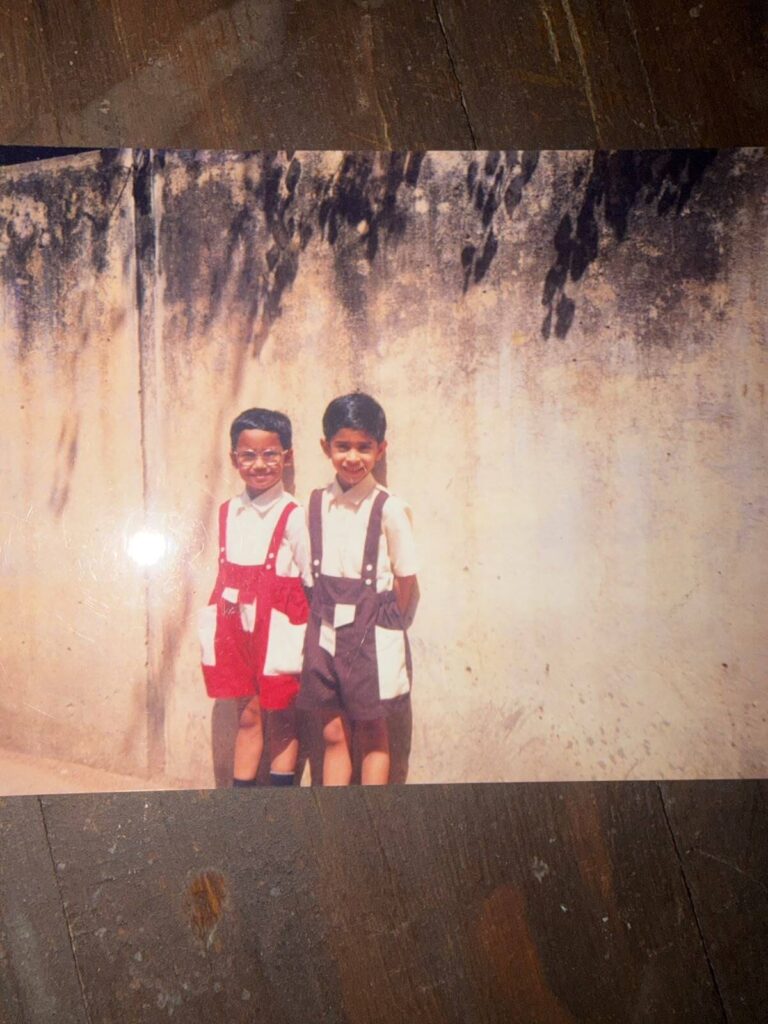
There is a picture of the two of us at our preschool. Who would have thought that two little kids, standing next to each other all those years ago, would grow up and find themselves crossing paths again as adults?
I reconnected at Nakul’s 25th birthday. We still don’t meet often—life in this city has a way of scattering people across different corners, different circles, different calendars. But when we do meet, it’s fun. No effort involved. Just two people picking up a thread that never really got cut, only paused.
Today, Nakul is carrying forward his family’s legacy in the restaurant and hospitality business, building an impressive portfolio—from Sikandar Rolls in UB City to 13th Floor, ASEAN on the Edge, Ebony, and a luxury homestay experience at Tranquil Resort, set amidst a working coffee and spice plantation.
A few weeks ago, I was at a friend’s wedding, and it turned out Nakul’s team was catering the event. I wasn’t there as his friend that evening. I was just another guest, an outsider watching from the crowd—and for the first time, I got to see how he actually operates.
He wasn’t standing in a corner directing people. He wasn’t the owner hovering at a safe distance, checking on numbers, nodding at his staff from across the hall. He was in it. Moving between tables, checking on guests, and at one point, I watched him pick up plates himself.
That stayed with me. Because that’s not what leadership usually looks like once a business grows past a certain size. Usually, the bigger you get, the more you delegate—and somewhere in that delegation, you lose touch with the floor, with the actual moment your customer is living through. Nakul hadn’t lost that. He was there for everyone, not as an owner keeping score, but as a team player still willing to do the smallest job in the room.
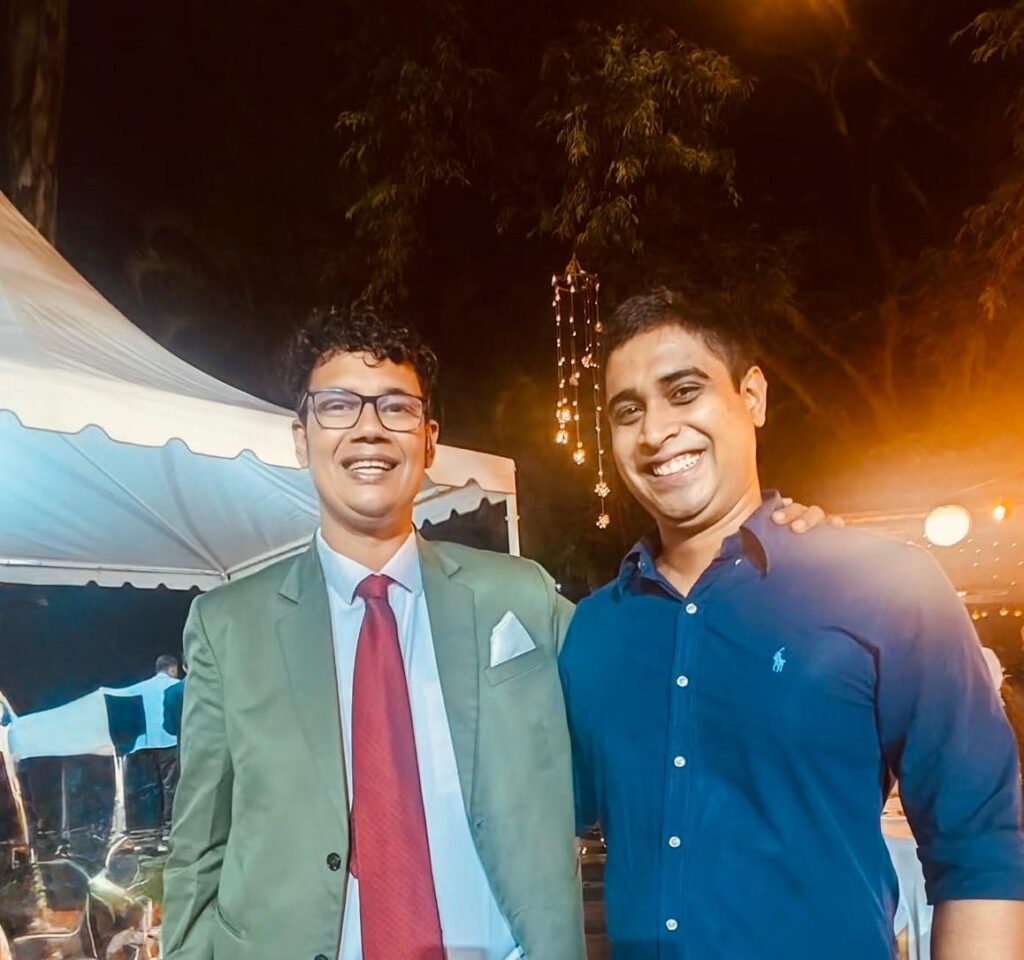
I don’t often see that in people who’ve built as much as he has. It made me think about how some of us build empires and forget the plate-picking-up part. And some, like Nakul, seem to remember that the plate-picking-up part was always the point.
And somewhere between then and now, that old pincode became much more than a location.
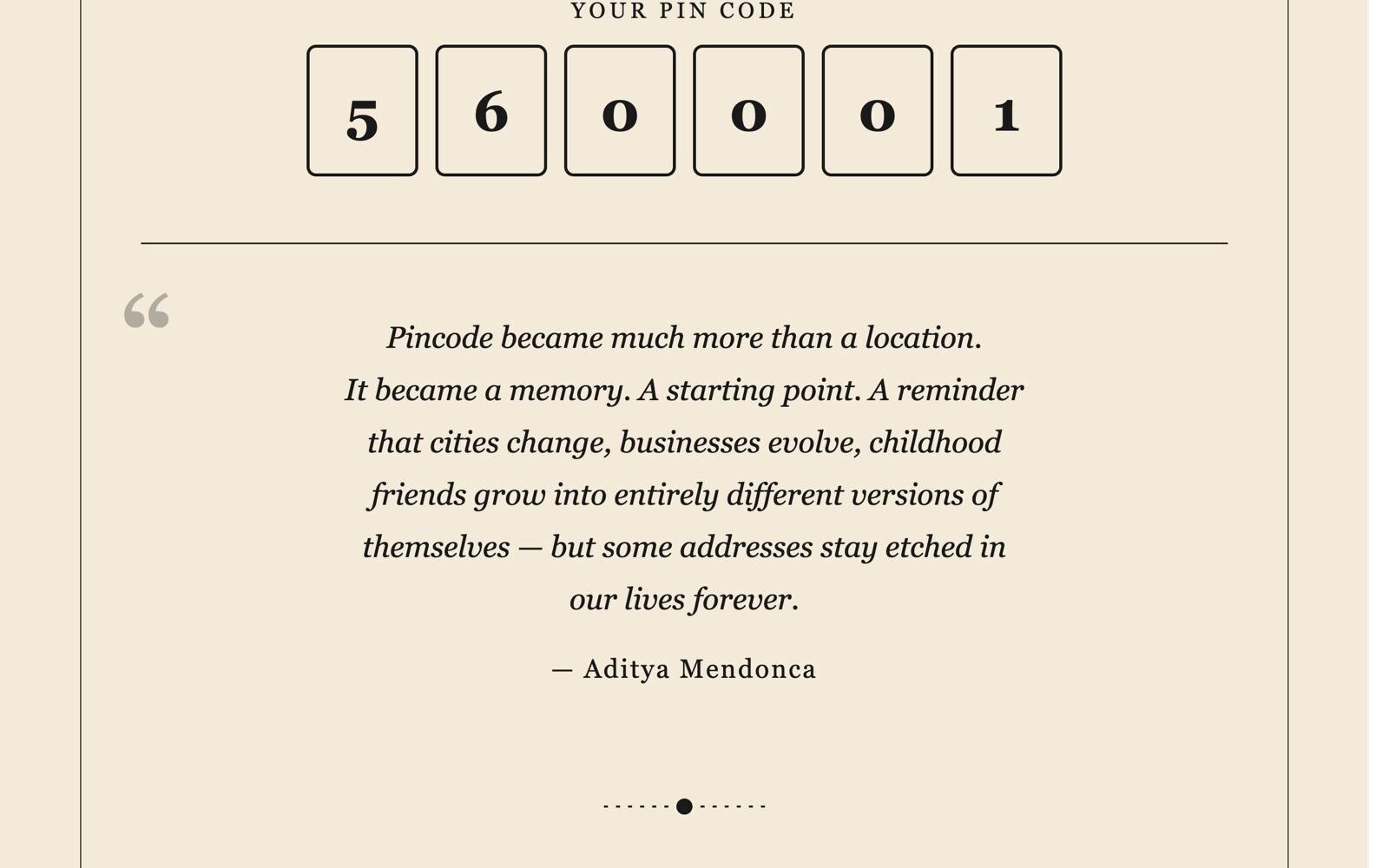
It became a memory. A starting point. A reminder that cities change, businesses evolve, childhood friends grow into entirely different versions of themselves—but some addresses stay etched in our lives forever.
We don’t pick our first pincode. It picks us. Nobody chooses where they’re born, where their parents decide to rent a house, or which school is closest to home. Your first pincode is handed to you. And yet, somehow, it ends up shaping more of your personality than you’d ever admit.
Think about it. The lane you learned to cycle in. The shop where you bought your first ice cream on credit because the uncle knew your mother. The park bench where you had your first heartbreak, or your first real conversation about what you wanted to be when you grew up. None of that was planned. It just happened, because you happened to live there.
I didn’t know Museum Road would matter this much when I was four years old, throwing tantrums outside Lumbini Pre-School. I just knew it as the place I had to go every morning. It’s only now, thirty-odd years later, that I can look back and see the shape of it—how a random pincode on a random street became the quiet backdrop to an entire childhood.
Bengaluru is a city of a hundred small pin codes — each with its own personality
That’s the thing about this city. It isn’t one Bengaluru. It’s dozens of them, stitched together, each with its own rhythm.
560001 is old Bengaluru—MG Road, Museum Road, the cantonment air of it, colonial buildings next to glass towers, old clubs next to new bars. 560025 is Ulsoor, lake views and quieter mornings. 560034 is Koramangala, all founders and filter coffee and co-working spaces that never seem to close. 560008 is Malleshwaram, where the smell of filter coffee and flowers on a Sunday morning tells you exactly which decade this city is holding onto.
Every one of these pincodes has raised a different kind of Bengalurean. The Malleshwaram kid who grew up going to the same idli shop for twenty years thinks about the city differently than the Koramangala kid who’s watched five restaurants open and shut on the same street corner. Neither is right or wrong. They’re just different versions of the same city, filtered through six digits.
And somehow, no matter how far you move, your first pincode never fully lets go of you. You carry its habits. Its shortcuts. Its unspoken rules about where you’re allowed to feel at home.
Pincodes are time capsules we don’t realise we’re building. Here’s what nobody tells you when you’re a kid growing up somewhere: you’re not just living there. You’re building a time capsule, one ordinary afternoon at a time.
The friend you sat next to in preschool because the teacher put you in alphabetical order. The gully cricket team you were drafted into because you happened to live on that street. The neighbour’s terrace you flew kites from every August. None of it feels significant while it’s happening. It’s just Tuesday. It’s just another day at Lumbini Pre-School.
It’s only years later, when you bump into that same childhood friend—now running a hospitality empire with a homestay tucked into a coffee plantation—that you realise the time capsule was real all along. You just didn’t know you were sealing it shut.
That’s what happened with Nakul and me. Two kids on Museum Road who had no idea they’d grow into two adults still circling the same small radius of the city, just in very different rooms of it now.
Museum Road today doesn’t look anything like it did in the ’90s. MURO has replaced the Lumbini Pre-School I remember. The buildings have gone up, the traffic has gotten worse, the coffee shops have gotten fancier, and half the shopfronts I grew up walking past don’t exist anymore.
But here’s the strange part—the feeling of the pincode hasn’t changed. Walk down Museum Road today and there’s still that same old-Bengaluru energy underneath the new paint. The cantonment quiet still shows up in the mornings before the traffic wakes up. The trees are still there, even if the buildings around them keep getting replaced.
Cities evolve. Businesses come and go. Kids grow up and become entirely different people—restaurateurs, editors, engineers, whatever life throws at them. But the pincode holds its ground. It’s the one constant in a city that otherwise refuses to sit still.
Why this matters more than it seems to.We talk a lot about how cities shape communities, economies, culture. But we rarely talk about how a six-digit number can quietly shape a person.
Your pincode decides who you bump into at the bakery. It decides which auto drivers know your face. It decides whether your first friend becomes a lifelong one, purely because you both happened to grow up on the same stretch of road, twenty years before either of you had any say in the matter.
And when you do run into that old pincode—literally or through an old friend—it doesn’t just bring back nostalgia. It brings back a version of yourself you’d almost forgotten existed. The kid who hadn’t figured anything out yet. The one who was just showing up every day, making memories without knowing it.
That’s the real story behind 560001 for me. Not the pincode itself, but everything it quietly built without asking permission—friendships, memories, a sense of home before I even knew what home meant.
Here’s the part that still gives me a strange déjà vu every time I think about it. Our office today—where I run The Good City from—sits in that very same pincode, 560001. And when my mother worked for Sunday magazine, years before I was even thinking about any of this, her office was right behind where my office is now. And she used to take me there sometimes after picking me up from my play school. Sometimes Gauri Lankesh would babysit me while Mom finished her story. Gauri was such a fun aunt, and my heart broke a little when she was killed for speaking her mind.
I didn’t plan that. Nobody plans that. I picked this office because it made sense for the business, because the location worked, because it felt right. Only after we moved in did the coincidence hit me—that decades before I ever sat at a desk here, she was doing the same thing a few hundred metres away, on the same six digits.
It makes you wonder how much of this is actually coincidence, and how much of it is just a pincode quietly pulling its own people back in. My mother built a career in journalism here. I’m now building one too, in my own version of it, on the same stretch of road. Maybe some pincodes don’t just shape you once. Maybe they hold onto a family and keep circling back to collect the next one.
As I build The Good City and spend more time in conversation with people across very different silos of this city—founders, chefs, athletes, editors, strangers at weddings—I keep running into small stories like this one. Moments that don’t make headlines. Stories I’ve usually just kept to myself, filed away as something nice that happened, nothing more.
I’ve decided to stop doing that. Not every story needs to be big to be worth telling. Sometimes it’s just a pincode, a plate being picked up, a birthday reconnecting two people who’d otherwise have drifted. So I’m going to start writing these down—the small stuff, the stuff that usually goes unspoken in a city that’s always moving too fast to notice it.
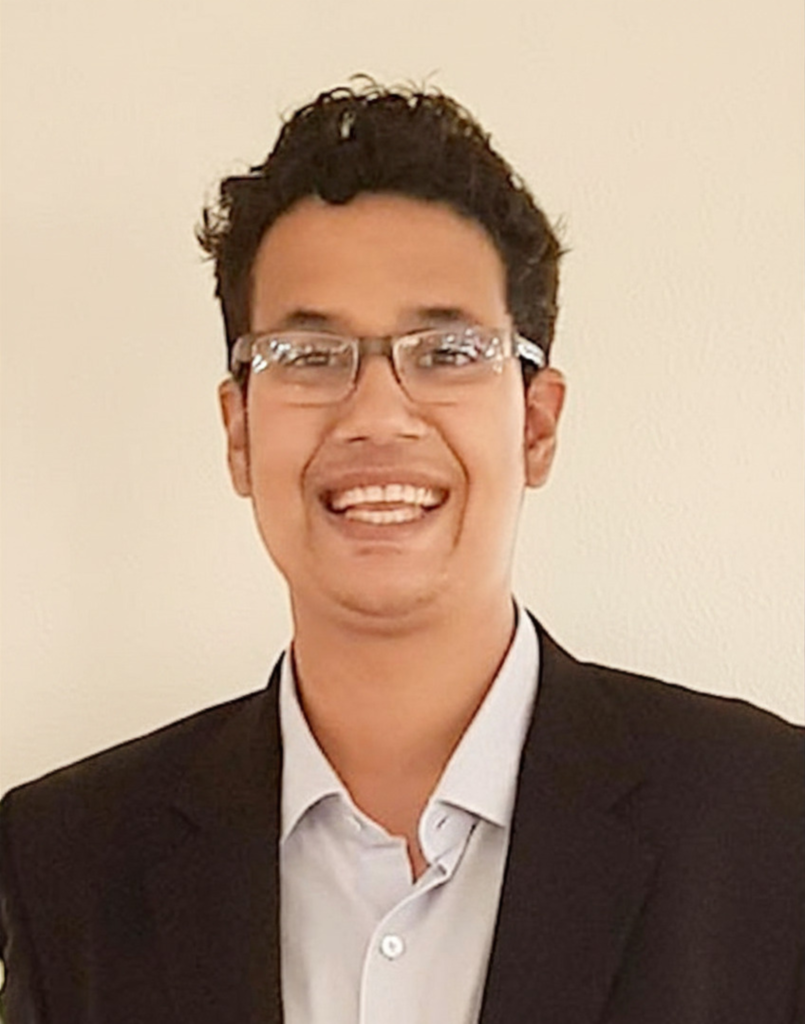
Aditya Mendonca is Executive Editor of The Good City.